ADHD Grocery List: Easy Foods to Keep at Home When Eating Feels Hard
Living with ADHD has taught me that grocery shopping is rarely just about knowing which foods are “healthy.”
The harder part is buying food that I will actually remember exists, feel like eating and have enough energy to prepare.
I can make the most beautiful meal plan in the world, fill the fridge with ambitious ingredients and genuinely believe that this time I will cook everything.
Then three days later I am staring into the refrigerator thinking:
There is technically food in here, but somehow there is nothing to eat.
That is why my ADHD grocery list looks a little different.
Instead of planning around an imaginary version of myself who cooks elaborate meals every evening, I try to keep foods at home that are:
- easy to see;
- quick to prepare;
- flexible enough to use in several meals;
- forgiving if I forget about them;
- satisfying enough that I actually want to eat them;
- useful on low-energy days.
This is not an ADHD diet and food does not treat ADHD.
Think of this as a low-friction grocery list for making everyday eating easier.
If eating regularly is one of the things you struggle with, you may also like my guide to dopamine-supporting foods.
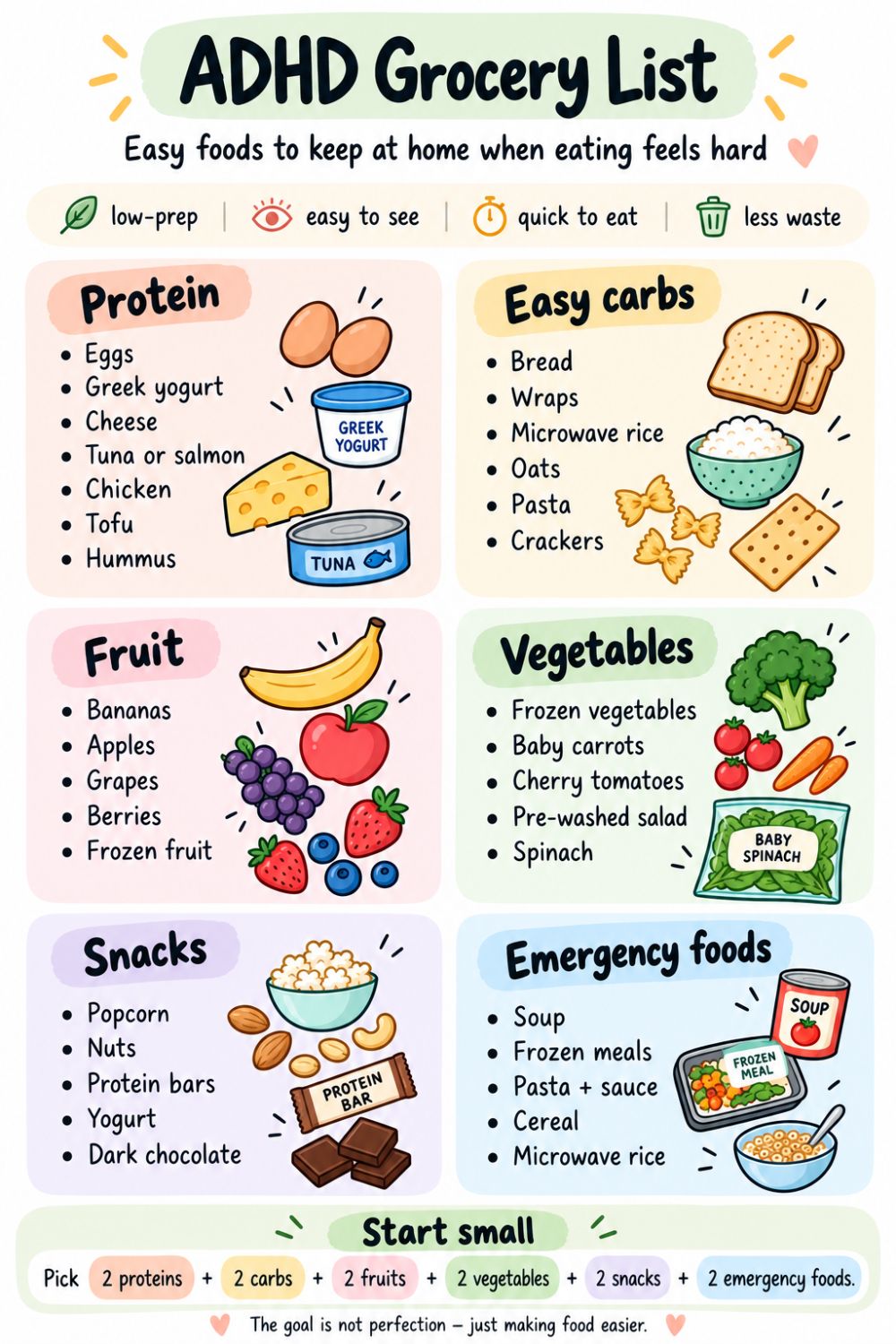
Quick ADHD Grocery List
If you just want something you can screenshot before going to the store, start here.
Protein
- eggs
- Greek yogurt
- cottage cheese
- cheese
- canned tuna or salmon
- rotisserie or pre-cooked chicken
- deli turkey
- tofu
- edamame
- beans
- lentils
- hummus
- peanut or almond butter
- protein bars
Easy carbohydrates
- bread
- wraps
- crackers
- microwave rice
- pasta
- oats
- cereal
- granola
- frozen waffles
- potatoes
- instant noodles
Fruit
- bananas
- apples
- grapes
- berries
- oranges
- frozen fruit
- applesauce or fruit pouches
Vegetables
- baby carrots
- cucumber
- cherry tomatoes
- pre-washed salad
- frozen vegetables
- spinach
- pre-cut vegetables
Easy snacks
- popcorn
- nuts
- trail mix
- crackers
- cheese sticks
- yogurt
- protein bars
- dark chocolate
- pretzels
- rice cakes
Emergency foods
- frozen meals
- soup
- microwave rice
- canned tuna
- pasta + jarred sauce
- frozen dumplings
- cereal
- bread in the freezer
- snack bars
You absolutely do not need everything on this list.
Pick the foods you already know you will eat.
If cooking feels impossible some days, keep ingredients for a few high-protein crunchy snacks on hand.
The Real Goal of an ADHD-Friendly Grocery List
I used to think grocery shopping should begin with:
What should I eat this week?
Now I think a much better question is:
What food will Future Me realistically be able to use?
Because ADHD can turn seemingly tiny food-related tasks into surprisingly large ones.
A meal might require:
- remembering you are hungry;
- deciding what you want;
- checking what ingredients you have;
- preparing them;
- cooking;
- waiting;
- cleaning afterward.
Suddenly “make lunch” is not one task.
It is seven.
So instead of only buying ingredients, I like having different levels of food difficulty available.
Level 1: Foods You Can Eat Immediately
These are the foods I want available when my executive function has completely left the building.
Think:
open → eat.
Good options include:
- Greek yogurt;
- cheese sticks;
- nuts;
- bananas;
- apples;
- protein bars;
- crackers;
- hummus;
- pre-cut vegetables;
- deli turkey;
- cottage cheese;
- ready-to-drink smoothies.
This category matters because sometimes the biggest barrier is simply starting.
If you regularly reach the point where cooking feels impossible, my no-cook meals for ADHD guide has more ideas.
Level 2: Foods That Become a Meal in Two Minutes
This is probably my favorite grocery category.
You do not need a recipe.
You need two or three things that work together.
Try keeping combinations like:
Greek yogurt + banana + granola
Apple + peanut butter
Crackers + cheese + grapes
Toast + egg
Wrap + turkey + cheese
Microwave rice + tuna + sauce
Hummus + pita + carrots
Cereal + milk + fruit
I find these much easier than deciding on a full recipe when I am already hungry.
You can also make everyday eating a little easier by creating a simple ADHD-friendly meal routine that works with your energy levels.
Protein Foods to Keep at Home
Protein foods are especially useful because they can become the anchor of a meal without requiring much planning.
My easiest options are:
Eggs
Scrambled eggs, boiled eggs, toast with egg or even an egg added to rice can turn basic ingredients into a meal quickly.
Greek yogurt
One of my favorite low-effort foods.
Add:
- berries;
- banana;
- granola;
- nuts;
- honey.
Done.
Cheese
Cheese sticks, slices and grated cheese are easy to notice and easy to combine with other foods.
Canned tuna or salmon
No defrosting.
No remembering that raw meat exists in the back of the refrigerator.
Add it to:
- bread;
- crackers;
- rice;
- wraps;
- salad.
Rotisserie or pre-cooked chicken
This can remove one of the highest-friction parts of cooking: dealing with raw meat.
Tofu and edamame
Useful plant-based options that can work in bowls, noodles or snack-style meals.
Beans and lentils
Canned versions are especially convenient.
Rinse them, add sauce or seasoning and combine with rice, wraps or vegetables.
For even more ideas, see my 50 dopamine-supporting foods.
Easy Carbs That Rescue Meals
One thing I no longer do is pretend every meal needs to start from scratch.
Convenience is allowed.
Keep some easy bases around:
- microwave rice;
- bread;
- wraps;
- pasta;
- crackers;
- oats;
- cereal;
- potatoes;
- noodles;
- frozen waffles.
These turn random fridge ingredients into something that actually feels like a meal.
For example:
rice + edamame + sauce
wrap + chicken + cheese
toast + avocado + egg
pasta + pesto + frozen vegetables
oatmeal + banana + peanut butter
You do not need twenty different recipes.
You need a few combinations your brain already recognizes.
Fruits That Are Hard to Forget
This sounds ridiculous until you have repeatedly bought fruit, put it somewhere invisible and rediscovered it much later.
I prefer fruit with low preparation requirements.
Good options:
- bananas;
- apples;
- grapes;
- berries;
- oranges;
- frozen berries;
- frozen mango.
Frozen fruit is particularly useful because forgetting about it for a week does not turn it into an expensive science experiment.
Vegetables With Less Friction
If buying vegetables means:
washing → peeling → chopping → cooking,
there is a good chance I will postpone eating them.
So I happily buy convenience.
Try:
- frozen vegetables;
- steamable vegetable bags;
- baby carrots;
- cherry tomatoes;
- pre-washed salad;
- pre-cut vegetables;
- frozen spinach.
Pre-cut vegetables count.
Frozen vegetables count.
Convenience food still counts as food.
ADHD-Friendly Snacks to Always Keep Around
Snacks become especially useful when you forget meals until you are suddenly very hungry.
I like keeping combinations rather than single foods.
For example:
- apple + peanut butter;
- popcorn + cheese;
- crackers + hummus;
- yogurt + granola;
- banana + nuts;
- berries + Greek yogurt;
- pretzels + cheese;
- dark chocolate + strawberries.
If texture helps food feel more appealing, I also have a whole list of high-protein crunchy snacks.
Build an Emergency Food Shelf
This might be one of the most ADHD-friendly changes I have made.
Have a few foods that are specifically for:
I cannot cook today.
Not aspirational food.
Not ingredients.
Actual emergency meals.
Keep things like:
- canned soup;
- microwave rice;
- canned tuna;
- pasta sauce;
- frozen meals;
- frozen dumplings;
- cereal;
- protein bars;
- crackers;
- shelf-stable milk;
- noodles.
I also like freezing bread.
It means bread cannot betray me by developing mold approximately twelve minutes after I remember buying it.
The “One From Each Category” Grocery Method
If a long grocery list overwhelms you, make it smaller.
Choose:
2 proteins
Example:
- eggs
- Greek yogurt
2 easy carbs
- bread
- microwave rice
2 fruits
- bananas
- apples
2 vegetables
- frozen broccoli
- baby carrots
2 snacks
- popcorn
- nuts
2 emergency foods
- soup
- frozen meal
That is already enough food to create multiple combinations.
You do not need a Pinterest-perfect refrigerator.
You need options.
ADHD Grocery Shopping Tip: Buy for Your Lowest-Energy Day Too
One of the biggest mistakes I used to make was shopping for my most motivated self.
I would imagine:
Of course I will cook this week.
Maybe I will.
But I also need food for Wednesday at 6:30 PM when I have used all my decision-making capacity and the idea of chopping an onion feels personally offensive.
So now I try to buy:
some cooking food + some assembly food + some emergency food.
That gives me options without requiring every day to have the same amount of energy.
Make Food Visible
Sometimes the grocery list is not the real problem.
The problem is that we buy the food and then forget about it.
Try:
- keeping snacks where you can see them;
- putting frequently eaten foods at eye level;
- using transparent containers;
- keeping a small snack basket near your desk;
- putting food that expires quickly at the front;
- freezing foods you repeatedly forget;
- storing ingredients together when they belong to the same easy meal.
I wrote more about this in my ADHD organization guide.
Create Default Meals
Decision fatigue is one of the quickest ways to turn a full refrigerator into:
I have nothing to eat.
So pick a few meals you never need to think about.
Mine might look like:
Breakfast
Greek yogurt + banana + granola
Lunch
Egg + avocado toast
Snack
Apple + peanut butter
Dinner
Microwave rice + salmon + frozen vegetables
Emergency meal
Soup + bread
You can build more combinations with my Dopamine Diet Meal Plan.
What Not to Buy Just Because You Think You “Should”
This was a useful lesson for me.
A food is not useful simply because it looks healthy in someone else’s grocery haul.
If you repeatedly buy:
- vegetables you hate;
- ingredients requiring complicated recipes;
- huge packages because they are cheaper;
- aspirational breakfast ingredients;
- foods you only eat when you are in a very specific mood;
you may actually spend more money because they keep going to waste.
An ADHD-friendly grocery list should reflect your actual behavior.
Not your ideal behavior.
Try the “Can I Actually Eat This?” Test
Before putting something in your cart, ask:
Do I already know how I will eat this?
If the answer is:
I will probably find a recipe later…
be suspicious. 😄
Instead:
Avocado → toast
Greek yogurt → banana + granola
Chicken → wrap
Frozen vegetables → rice bowl
Hummus → crackers + carrots
One obvious use is often enough.
ADHD Grocery List Template
You can copy this before your next shopping trip.
Protein
☐ Eggs
☐ Greek yogurt
☐ Cheese
☐ Chicken
☐ Tuna
☐ Tofu
☐ Beans/lentils
☐ Hummus
Carbs
☐ Bread
☐ Wraps
☐ Microwave rice
☐ Pasta
☐ Crackers
☐ Oats
☐ Cereal
Fruit
☐ Bananas
☐ Apples
☐ Grapes
☐ Berries
☐ Frozen fruit
Vegetables
☐ Frozen vegetables
☐ Baby carrots
☐ Cherry tomatoes
☐ Pre-washed salad
☐ Pre-cut vegetables
Snacks
☐ Popcorn
☐ Nuts
☐ Protein bars
☐ Crackers
☐ Dark chocolate
Emergency meals
☐ Soup
☐ Frozen meal
☐ Frozen dumplings
☐ Pasta + sauce
☐ Microwave rice
☐ Cereal
Start With 12 Foods, Not 50
If you feel the urge to build the ultimate ADHD grocery system immediately, try something smaller.
Choose:
- 2 proteins;
- 2 carbs;
- 2 fruits;
- 2 vegetables;
- 2 snacks;
- 2 emergency foods.
That is enough.
Use them for a week.
Notice what disappears first.
Notice what you ignore.
Then build your grocery list around what actually works, rather than what you think you are supposed to eat.
Because ultimately, the best ADHD grocery list is not the most nutritionally impressive list on the internet.
It is the one that makes feeding yourself a little easier.
FAQ
What should be on an ADHD grocery list?
Focus on foods that are easy to prepare, visible, flexible and realistic for your energy level. Useful staples can include eggs, yogurt, bread, microwave rice, frozen vegetables, fruit, canned fish, nuts, crackers and a few emergency meals.
What are good easy foods for adults with ADHD?
Good options include yogurt, eggs, toast, fruit, cheese, hummus, microwave rice, frozen vegetables, wraps, canned tuna and simple snack combinations.
How can I grocery shop with ADHD without getting overwhelmed?
Start with a short list of categories rather than planning dozens of recipes. Choose a few proteins, carbohydrates, fruits, vegetables, snacks and emergency foods.
What groceries are good for ADHD burnout days?
Keep foods requiring almost no preparation, such as protein bars, yogurt, fruit, crackers, cheese, microwave rice, canned soup and frozen meals.
Should I meal plan if I have ADHD?
You do not necessarily need a detailed seven-day plan. A few default meals and easy food combinations may be enough to reduce daily decisions.