How to Create a Low-Stimulation Home When You Have ADHD
An ADHD-friendly home doesn’t have to be perfectly minimalist. It just needs to make everyday life a little easier.
Have you ever walked into your living room after a long day and suddenly felt overwhelmed by everything around you?
The laundry on the chair. The unopened packages. The bright overhead light. The television playing in the background. The random objects covering every available surface.
None of these things seems like a big deal on its own. But together, they can make your home feel like one more thing your brain has to deal with.
If you have ADHD, creating a low-stimulation home might be one of the most practical ways to make your everyday environment feel more manageable.
And no, this doesn’t mean getting rid of everything you own, painting your entire apartment beige, or becoming the kind of person who somehow never leaves a coffee mug on the table.
I actually love cozy spaces, personal objects, and little details that make a home feel lived in.
But I’ve also learned that there is a difference between a space that feels stimulating in a good way and one that constantly demands your attention.
Let’s explore how to find that balance.
What Is a Low-Stimulation Room?
A low-stimulation room is a space designed to minimize overwhelming sensory input, such as bright lights, loud noises, strong smells, and excessive visual clutter.
You might also hear it called a low-sensory room, sensory-friendly room, or calming room.
These spaces are sometimes used in hospitals, schools, and wellness facilities, but you can create a similar environment in your own home.
For adults with ADHD, a low-stimulation room can offer a comfortable place to unwind when everyday distractions start feeling overwhelming.
And the best part? You don’t need an entire spare bedroom.
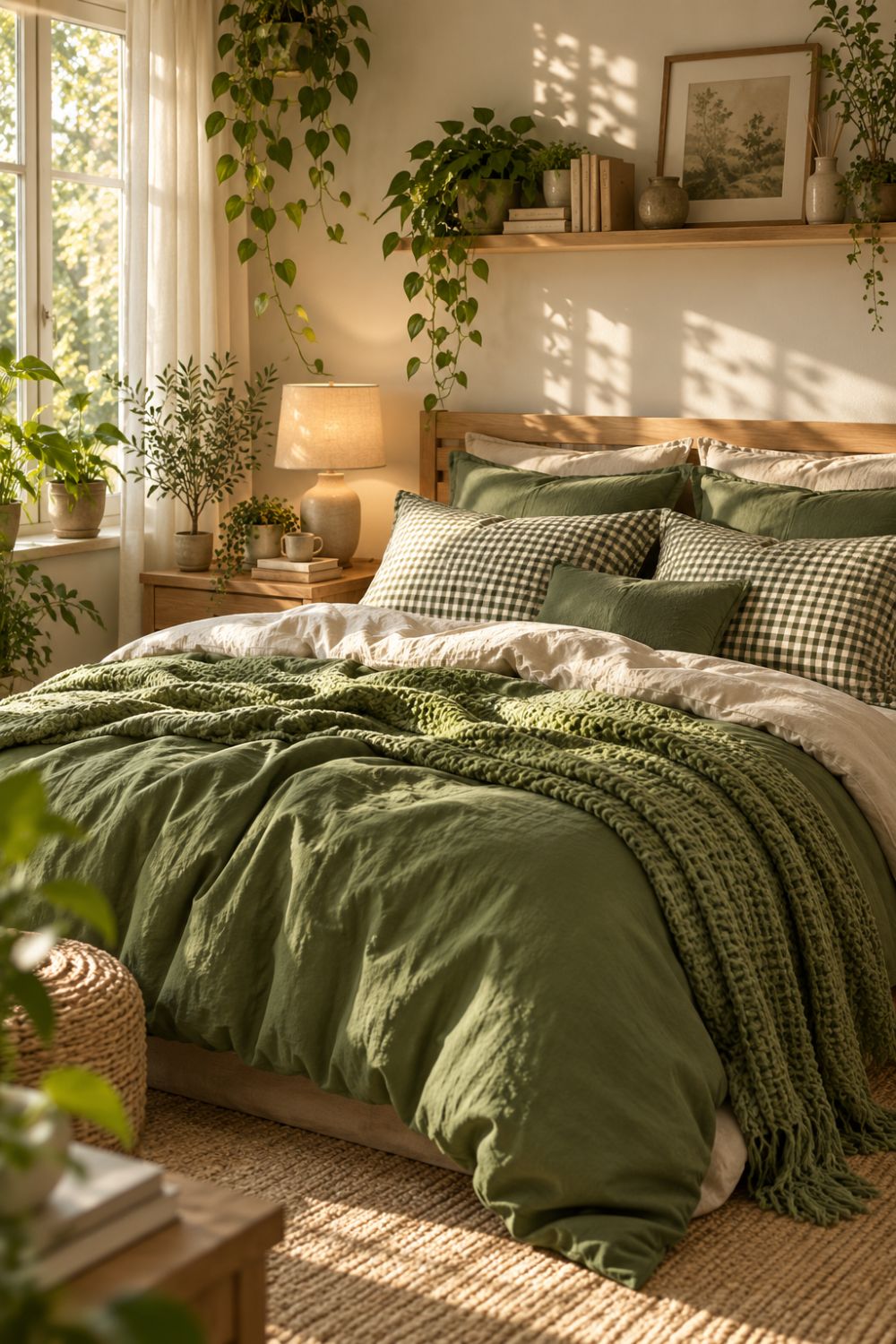
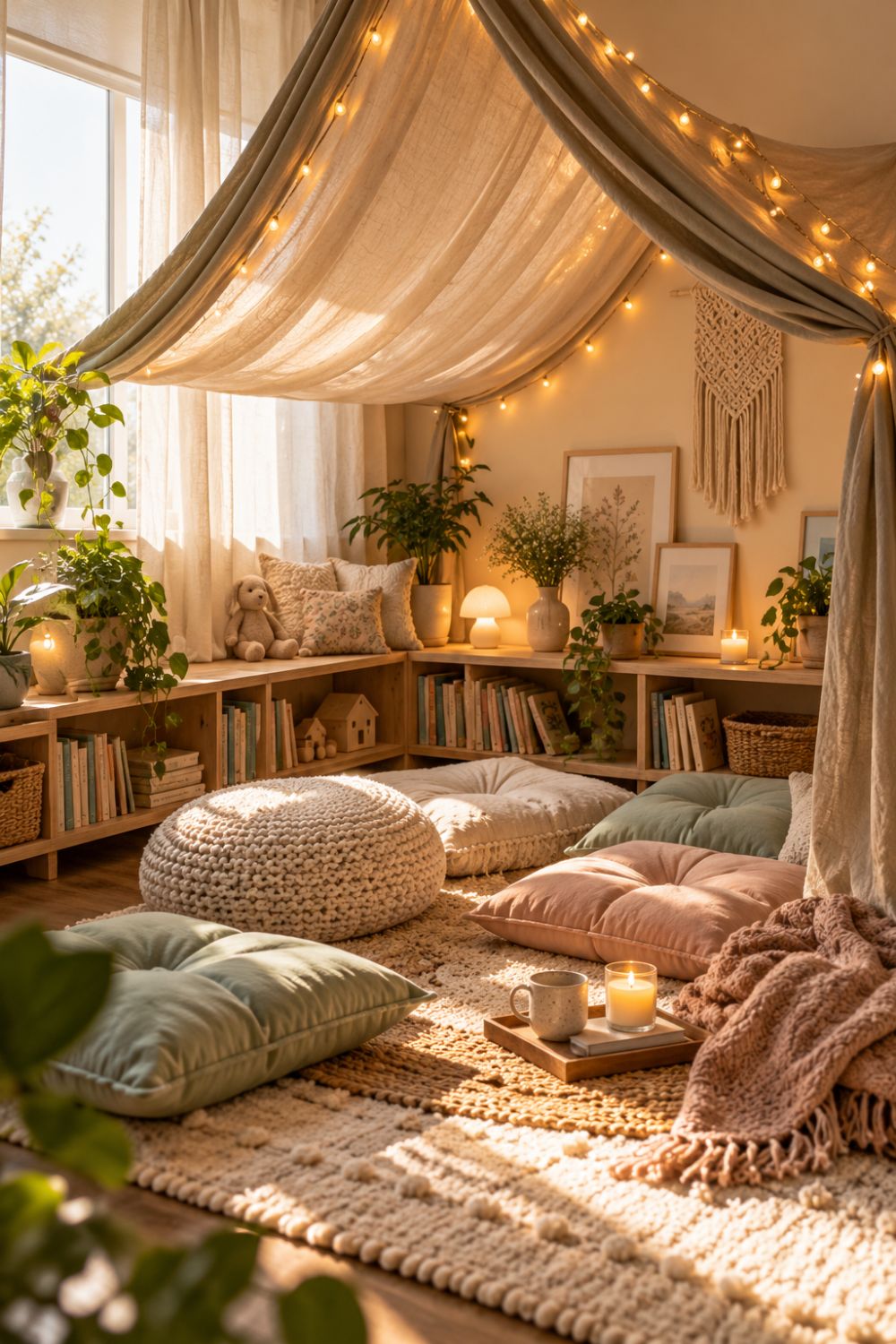
A cozy reading nook, a quiet corner of your living room, or even a comfortable chair beside a window can become your personal low-stimulation space.
The goal isn’t to remove everything stimulating. It’s to give yourself more control over your surroundings.
Why Can Your Home Feel Overstimulating When You Have ADHD?
ADHD is associated with differences in attention regulation and executive functioning. Some people with ADHD also report heightened sensitivity to sounds, lighting, textures, or other sensory experiences.
Imagine trying to relax while your attention keeps jumping between unfinished tasks.
A pile of laundry might remind you that you need to wash your clothes.
An unopened letter reminds you about paperwork.
A crowded desk reminds you about a project you haven’t finished.
And suddenly, sitting on the couch doesn’t feel particularly relaxing anymore.
I think this is an important distinction: sometimes the problem isn’t simply having too many things. It’s having too many things that demand a decision.
You don’t necessarily need an entirely different home.
You might just need to make a few everyday decisions easier.
1. Reduce Visual Clutter Without Hiding Everything
One of the most confusing things about ADHD-friendly organization is that two seemingly opposite ideas can both be helpful.
You want fewer visual distractions.
But you also need important things to remain visible enough that you remember them.
If you’ve ever put something into a beautifully organized drawer and completely forgotten it exists, you probably know what I mean.
So instead of asking, How can I hide all my clutter?, try asking:
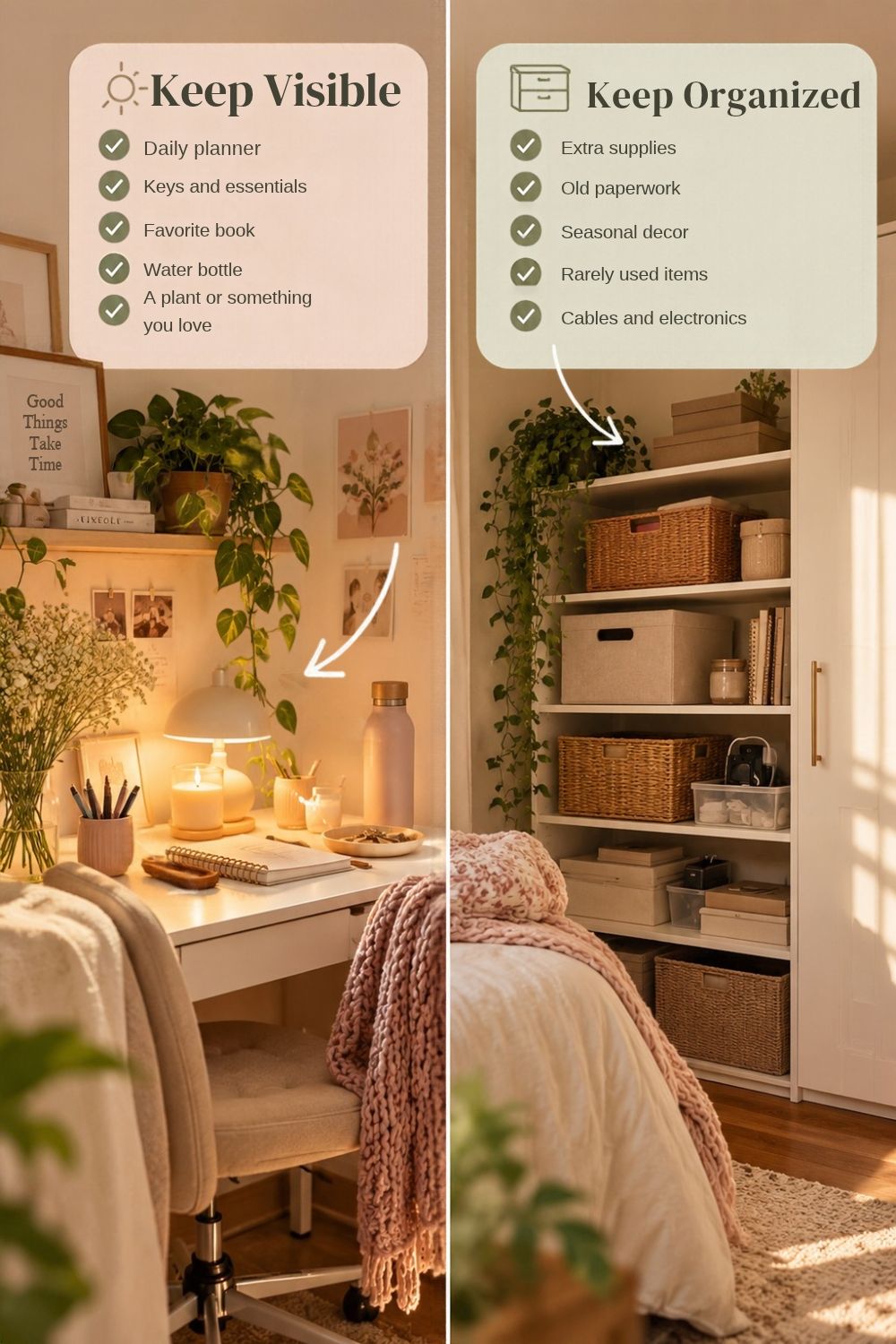
What do I actually need to see, and what can I safely put away?
Here’s a simple system:
| Keep visible | Store out of sight |
|---|---|
| Daily medication or supplements, stored safely | Occasional-use products |
| Your everyday planner | Old notebooks and paperwork |
| Frequently used kitchen tools | Rarely used appliances |
| Keys and everyday essentials | Seasonal accessories |
| One meaningful decorative display | Excess decorative items |
This approach gives important objects a clear place without forcing everything into closed storage.
For example, a small tray near the front door can keep your keys, wallet, and sunglasses visible without letting them spread across the entire entryway.
If you want to explore this further, I have a complete guide to ADHD-friendly organization systems that focuses on making your home easier to manage, even on low-energy days.
2. Create One Visually Calm Area
You don’t have to transform your entire home at once.
Actually, I wouldn’t recommend trying.
If your space currently feels overwhelming, choose just one area where your eyes can rest.
It might be:
- Your bedside table.
- One corner of your living room.
- The surface of your desk.
- A comfortable reading chair.
- A small section of your bedroom.
Remove anything that doesn’t belong there.
Keep one or two objects that make you happy, such as a favorite plant, a framed photograph, or a beautiful lamp.
The goal is to create a little visual breathing room.
Think of it as having a quiet corner for your eyes, not just your body.
And remember that a calm space doesn’t have to look empty.
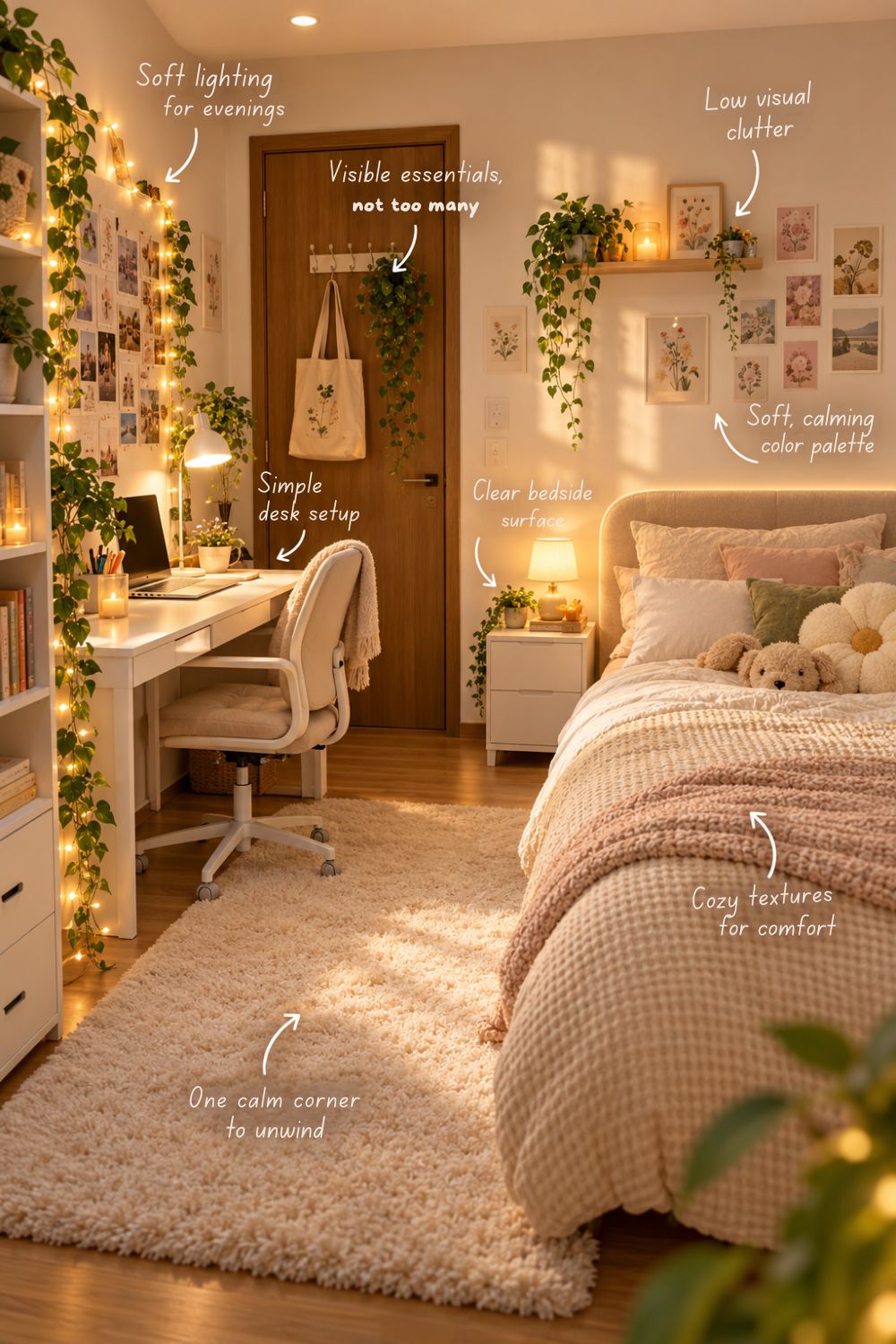
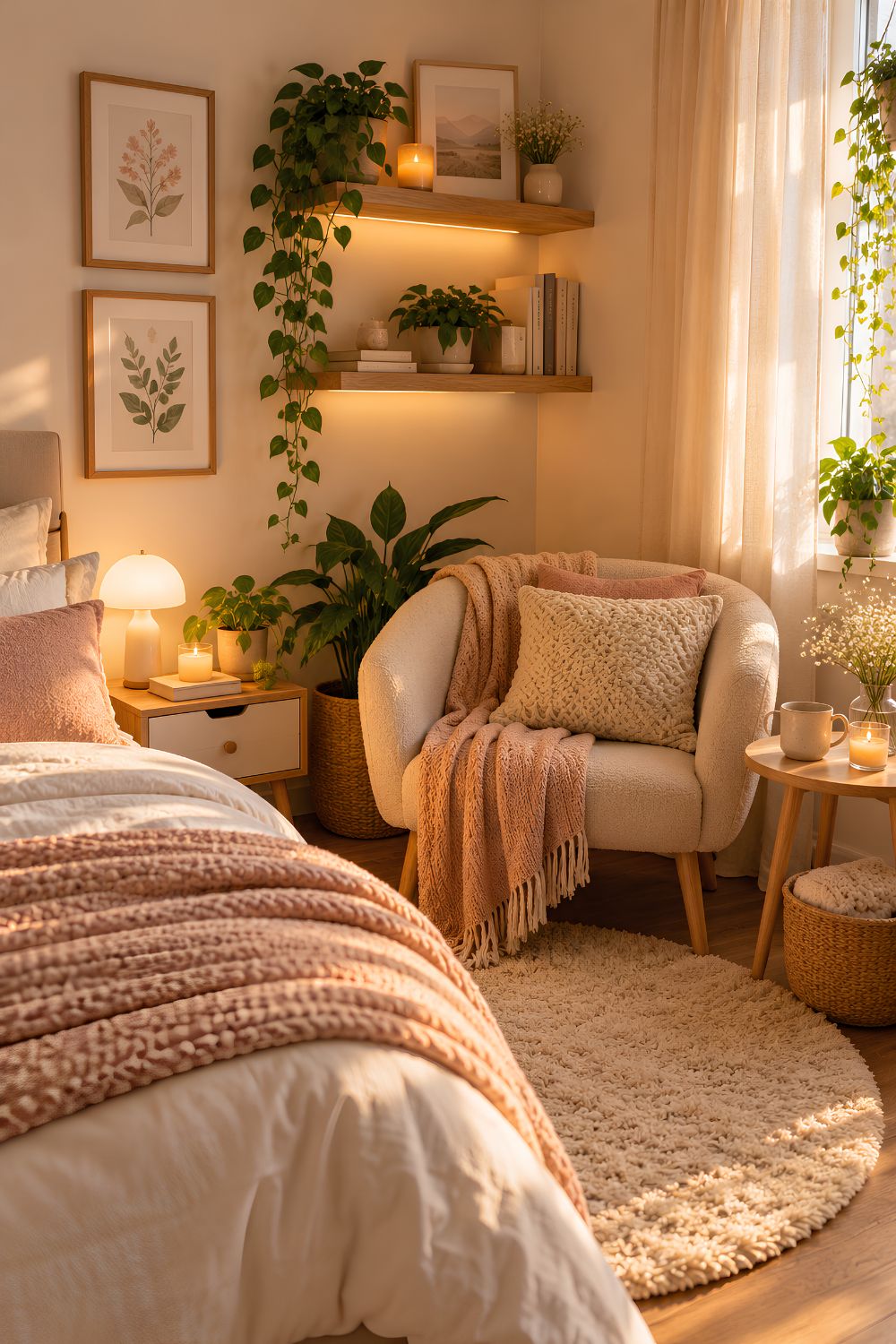
A warm blanket, a textured cushion, and a few thoughtfully chosen objects can create a comforting atmosphere without making the space feel busy.
How to Create a Low-Stimulation Sensory Room for Adults
You don’t need expensive sensory equipment or a professionally designed room to create a calming space.
Start with these simple, budget-friendly ideas:
1. Choose a quiet corner. Find an area away from busy walkways, televisions, and household distractions.
2. Use adjustable, gentle lighting. Try a warm bedside lamp, dimmable lights, or soft indirect lighting instead of harsh overhead lights.
3. Add comfortable sensory-friendly textures. Choose a soft blanket, supportive chair, or floor cushion that feels pleasant to you.
4. Reduce visual distractions. Keep the immediate area relatively clear, and use baskets or closed storage for items you don’t need every day.
5. Include one or two calming activities. A favorite book, journal, coloring supplies, or quiet hobby can make the space more inviting.
6. Make sensory tools optional. Noise-reducing headphones, a preferred fidget, or a familiar comforting object may help you settle in.
7. Keep the decor personal. Choose colors, plants, and decorative objects that make you feel comfortable rather than following strict minimalist rules.
Remember, a sensory-friendly room doesn’t have to be completely silent or visually empty. Some adults with ADHD prefer a little background music, gentle movement, or colorful accents.
The best low-stimulation room is one that matches your individual sensory needs.
3. Use Lighting That Matches Your Energy Levels
Lighting is one of those environmental details that’s easy to overlook until you realize how much it affects your experience of a room.
Bright ceiling lights might be useful when you’re cleaning, cooking, or working on something that requires concentration.
But the same lighting can feel unpleasant when you’re tired or trying to relax.
Instead of relying on one overhead light, try creating a few different lighting options.
For focused activities
Choose adjustable task lighting that gives you enough brightness to see comfortably.
A desk lamp, under-cabinet kitchen lighting, or an adjustable reading light can be more useful than illuminating the entire room.
For relaxing
Try softer, indirect lighting.
A warm-toned lamp beside your couch or bed can make an evening feel more comfortable without completely darkening the space.
For winding down
Lower the brightness gradually as you move toward bedtime, especially if harsh light feels distracting.
You don’t need expensive smart-home equipment to experiment with this.
A couple of well-placed lamps can make a noticeable difference in how a room feels.
Lighting isn’t just about visibility — it also plays a big role in how welcoming and comfortable a room feels.
If you’re looking for more inspiration on combining soft lighting with thoughtful home decor, take a look at The Rosie Home Edit. Her blog explores how small, intentional design choices can help you create a cozy, beautiful home that feels good to spend time in.
4. Make Your Home Cozy Without Making It Cluttered
Here’s something I think is often missing from ADHD home organization advice.
We talk a lot about storage containers, labels, routines, and cleaning systems.
But your home should also be somewhere you genuinely enjoy spending time.
A functional home that feels cold, uncomfortable, or completely disconnected from your personality isn’t necessarily the answer.
You can absolutely love decorating and still want a less stimulating environment.
The trick is to choose details intentionally.
For example:
- Use a few harmonious colors rather than too many competing patterns.
- Choose comfortable materials that feel pleasant against your skin.
- Add warm lighting instead of relying exclusively on decorative objects.
- Group smaller accessories together instead of scattering them around the room.
- Leave some surfaces clear so the objects you love can stand out.
I especially like the idea of combining practical organization with warm, natural textures.
If you enjoy this softer, intentional approach to decorating, I recommend exploring The Rosie Home Edit’s guide to creating a cozy living room sanctuary.
It shares beautiful ideas for using layered lighting, natural materials, and thoughtful decorating choices to create a welcoming atmosphere without filling every corner with more stuff.
I love how this approach complements ADHD-friendly organization: your space can be both visually calming and full of personality.
You don’t have to choose between a beautiful home and a practical one.
5. Design Around Your Actual Habits
This might be my favorite ADHD organization principle.
Stop designing your home around the person you think you should be.
Instead, design it around the person you actually are.
If your jacket always ends up on the same chair, perhaps that chair is telling you something.
Maybe the wardrobe is inconvenient.
Maybe hanging your jacket on a hanger takes one step too many.
Or maybe you simply need a hook exactly where you naturally take it off.
Here are a few more examples:
| Everyday problem | Lower-friction solution |
|---|---|
| Clothes pile up beside the bed | Put a laundry basket nearby |
| Keys constantly disappear | Place a tray beside the entrance |
| You forget to drink water | Keep a water bottle at your desk |
| Cleaning supplies are difficult to access | Keep frequently used supplies near the area where you use them, safely stored |
| Important papers get lost | Create one clearly labeled inbox tray |
| Your bedside table collects random objects | Add a small catch-all basket |
A system doesn’t have to look impressive.
It just needs to be easy enough that you’ll use it on an ordinary Tuesday when you’re tired and don’t feel like organizing anything.
6. Pay Attention to Sounds, Smells, and Textures
A low-stimulation home isn’t only about what you see.
Your other senses matter too.
For some people, a ticking clock, a constantly humming appliance, or multiple background sounds can be surprisingly distracting.
Others find silence uncomfortable and focus better with gentle music or white noise.
The same applies to fragrances and textures.
A scented candle might create a cozy atmosphere for one person and trigger discomfort for another.
A beautiful decorative pillow might look wonderful but feel unpleasant against your skin.
Instead of following a universal sensory-friendly checklist, observe what actually bothers you.
Ask yourself:
- Are there sounds I regularly find distracting?
- Do certain fabrics feel uncomfortable?
- Does strong fragrance make it harder for me to relax?
- Do I prefer natural light or softer indoor lighting?
- Do I feel better with some background noise or with silence?
You don’t need to change everything.
Sometimes replacing one uncomfortable texture or moving one noisy object can make a space more pleasant.
The important thing is experimenting with what works for you.
7. Create a Low-Energy Reset Station
One of the most useful things you can do for an ADHD-friendly home is prepare for the days when your energy is low.
Not every day will be a productive day.
Sometimes the dishes pile up, your attention feels scattered, and even a small cleaning task seems exhausting.
That’s why I like the idea of having a simple reset station.
It doesn’t need to be complicated.
You could keep a small basket containing:
- A microfiber cloth.
- A small trash bag.
- A simple cleaning checklist.
- A timer.
- A pair of cleaning gloves.
Store cleaning products separately and safely according to their labels.
Then, when your space starts feeling overwhelming, you don’t need to invent a cleaning system.
You already have a starting point.
Try this five-minute reset:
- Throw away obvious trash.
- Put dishes in the kitchen.
- Collect laundry in one place.
- Clear one frequently used surface.
- Stop and notice what feels better.
That’s enough.
You can do more if you have the energy, but you don’t have to.
For a more detailed approach, read my guide to cleaning with ADHD when everything feels overwhelming.
8. Make Space for the Things That Give You Energy
This is where I think a low-stimulation home becomes especially interesting.
Reducing unwanted stimulation doesn’t mean removing everything that brings you joy.
In fact, I think creating space for enjoyable activities is just as important as clearing away distractions.
Maybe you love reading.
Perhaps you enjoy creative hobbies, listening to music, playing with your pet, or making a comforting afternoon drink.
Instead of keeping these activities hidden away, try making them easier to access.
Create a tiny reading corner with a book and a comfortable blanket.
Keep your journal somewhere you’ll actually notice it.
Place a small craft basket near the table where you usually work.
The idea is to make positive, intentional activities easier to start without keeping every hobby supply on display.
You could even create a small dopamine menu for your home.
A dopamine menu is simply a personal list of activities you enjoy, organized so you can choose something without having to think too hard about it.
Here are a few examples for a cozy evening at home:
- Read one chapter of a book.
- Make a warm drink.
- Listen to a favorite album.
- Spend ten minutes on a creative hobby.
- Stretch on a soft yoga mat.
- Cuddle your pet.
- Sit by a window and take a break.
- Watch an episode of a comfort show.
You can find more inspiration in my collection of 75+ dopamine menu ideas for ADHD.
The goal isn’t to force yourself to feel happy or productive.
It’s to make the activities you genuinely enjoy a little easier to choose.
9. Give Every Room One Clear Priority
If you try to make every room perfect, you may end up creating a project that never really finishes.
Instead, decide what each space needs to help you do.
For example:
Bedroom: Rest and recover.
Reduce unnecessary clutter around the bed, keep your essential nighttime items nearby, and choose lighting that feels comfortable.
Kitchen: Prepare food with fewer decisions.
Keep frequently used ingredients and tools accessible. Try creating a simple area for easy breakfasts or snacks.
Living room: Relax and connect.
Create comfortable seating, manageable storage, and a place for the activities you enjoy.
Workspace: Make starting easier.
Keep your current task visible, remove unnecessary distractions, and make the tools you need easy to reach.
Your rooms can serve multiple purposes.
But choosing one main priority can help you decide what deserves space and attention.
10. Build a Home That Works on Your Hardest Days
I think this is the most important part.
It’s easy to organize a home for your most motivated self.
The version of you who has unlimited energy, remembers every task, and always puts things away immediately.
But your home also needs to work when you’re distracted, exhausted, overstimulated, or simply having an ordinary messy day.
That’s why I would choose a simple, imperfect system that works most of the time over a beautiful, complicated system that falls apart after a week.
If the basket is full, empty it when you can.
If your cozy corner becomes cluttered, reset it.
If a storage system stops working, change it.
You haven’t failed because your home isn’t permanently organized.
You’re allowed to adjust your environment as your needs change.
A Simple Low-Stimulation Home Checklist
If you’re not sure where to begin, start with this small checklist.
- Choose one area that feels visually overwhelming.
- Remove five objects you don’t need there.
- Create a dedicated place for one frequently misplaced item.
- Adjust one light source to feel more comfortable.
- Identify one distracting sound or uncomfortable texture.
- Make one enjoyable activity easier to access.
- Set up a simple five-minute cleaning reset.
- Leave one surface intentionally clear.
You don’t need to finish all eight steps today.
Choose the one that would make the biggest difference right now.
Final Thoughts: Your Home Doesn’t Need to Be Perfect to Feel Good
Creating a low-stimulation home with ADHD isn’t about achieving an Instagram-perfect minimalist aesthetic.
It’s about reducing unnecessary friction and making your environment work better for you.
Some people feel happiest surrounded by warm neutrals, soft blankets, and carefully chosen decorations.
Others love colorful spaces filled with art, plants, and interesting objects.
Neither approach is automatically better for ADHD.
The question is whether your environment supports your attention, comfort, and everyday routines.
And sometimes, the most effective change isn’t buying another organizer or completely redecorating a room.
It’s moving a basket, clearing one surface, changing a lightbulb, or putting your favorite book somewhere you’ll actually reach for it.
A supportive home isn’t one that never gets messy. It’s one that makes everyday life a little easier to return to.
Start small. Keep what works. Change what doesn’t.
Your home is supposed to work for you — not the other way around.
Frequently Asked Questions
What is a low-stimulation home?
A low-stimulation home is a living space designed to reduce unwanted visual, auditory, and other sensory distractions. It often uses simple organization systems, comfortable lighting, and thoughtfully arranged spaces to support everyday comfort.
Is minimalism good for ADHD?
Minimalism can be helpful for some people with ADHD because fewer objects may mean fewer distractions and organizing decisions. However, strict minimalism isn’t necessary. Some people benefit from keeping important items visible and having stimulating, personalized surroundings.
How do I make my bedroom less overstimulating?
Start by clearing one surface, reducing distracting clutter around your bed, adjusting your lighting, and choosing comfortable bedding. Try to keep essential nighttime items within easy reach.
How can I organize my home with ADHD?
Focus on simple, low-effort systems that match your existing habits. Use accessible storage, visible reminders, and dedicated places for frequently used items rather than complicated organizing methods that require constant maintenance.
Can a colorful home still be ADHD-friendly?
Absolutely. A low-stimulation home doesn’t have to be beige or minimalist. You can use color, interesting textures, and personal decorations while keeping the overall environment manageable and comfortable for your individual sensory preferences.