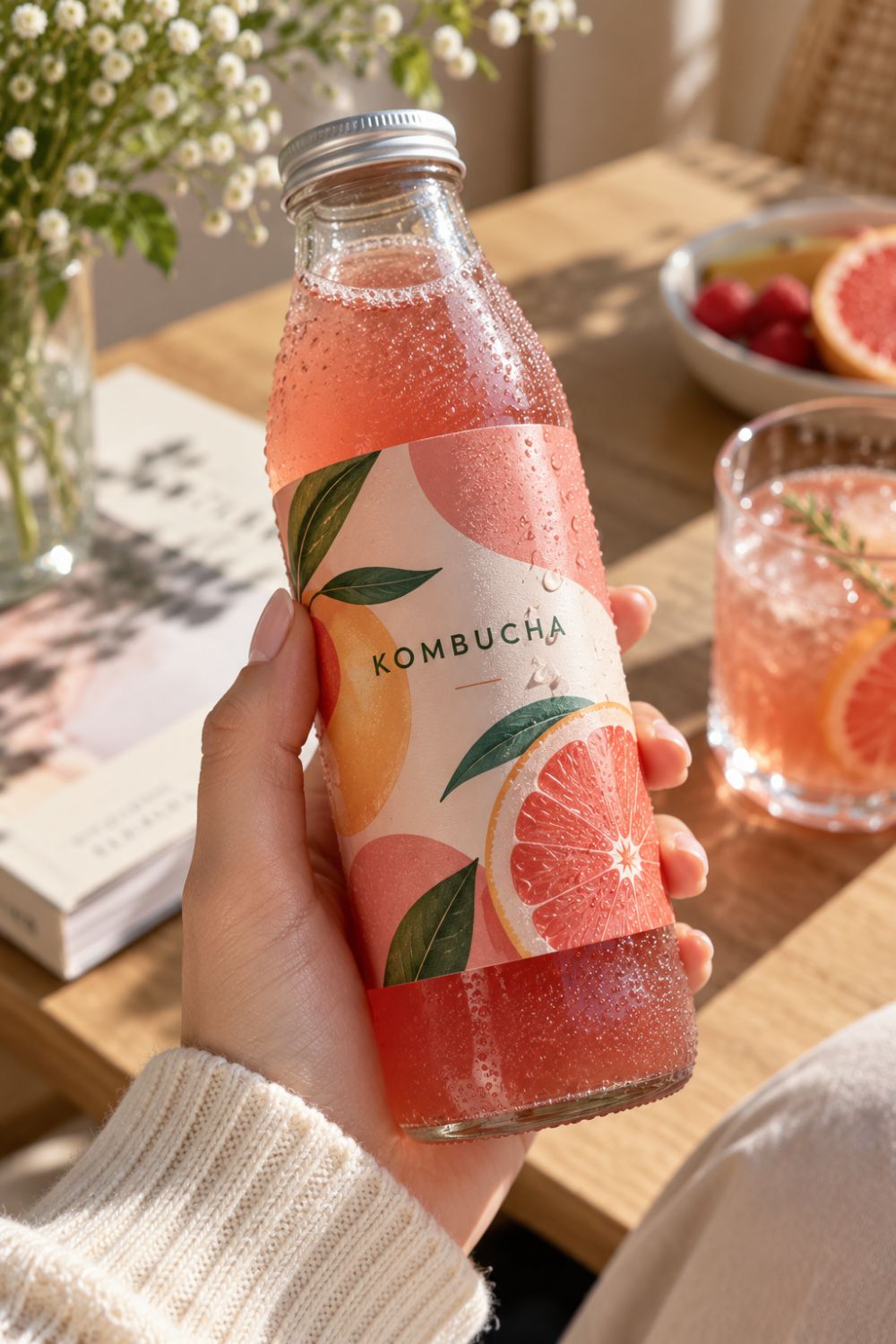
Kombucha for Beginners: Benefits, Vegan Drinks & Easy Recipes
Looking for a refreshing drink that feels a little more exciting than plain water? Meet kombucha: a fizzy, tangy fermented tea that has become a favorite among people who enjoy plant-based drinks, simple wellness rituals, and experimenting with new flavors.
Whether you’re wondering if kombucha is vegan, curious about its gut health benefits, or looking for an easy kombucha drink recipe, this beginner-friendly guide has you covered.
And here’s something I particularly love about it: kombucha can turn a completely ordinary moment into a small treat.
Sometimes, that’s exactly what we need.
What Is Kombucha Tea?
Kombucha is a fermented tea drink traditionally made with four ingredients:
- Black or green tea
- Sugar
- Water
- A SCOBY (a symbiotic culture of bacteria and yeast)
During fermentation, microorganisms in the SCOBY transform some of the sugar into organic acids, carbon dioxide, and other compounds.
The result? A slightly sweet, pleasantly sour, and naturally fizzy drink.
Depending on how it’s prepared, kombucha can taste fruity, floral, earthy, or almost like sparkling apple cider.
It’s available in grocery stores and health food shops, but many people also enjoy making kombucha at home.
What Does Kombucha Taste Like?
If you’ve never tried kombucha, imagine a refreshing combination of iced tea, sparkling lemonade, and a tiny splash of apple cider vinegar.
The exact flavor depends on the tea, fermentation time, and added ingredients.
Some of my favorite flavor combinations to look for are ginger, berries, and citrus.
If you’re trying kombucha for the first time, a lightly flavored, fruity variety might be a good place to start.
Is Kombucha Vegan?
Yes, traditional kombucha is naturally vegan.
The basic ingredients are tea, sugar, water, and a culture of bacteria and yeast. No animal-derived ingredients are required.
And despite its unusual appearance, a SCOBY isn’t an animal or a mushroom. It’s a living community of microorganisms that work together during fermentation.
However, not every flavored kombucha product is necessarily vegan.
Some commercial drinks may contain added honey or other animal-derived ingredients, so checking the label is always a good idea.
If you’re following a plant-based diet, look for products made with tea, fruit juice, herbs, and plant-based flavorings.
Kombucha Benefits: Is It Actually Good for You?
Kombucha is often described as a probiotic drink or a gut-friendly alternative to soda.
But how much of that is supported by science?
1. It may influence your gut microbiome
Because kombucha is fermented, some unpasteurized varieties contain living microorganisms.
Researchers are interested in whether these microorganisms and fermentation-derived compounds can influence gut health.
A 2025 systematic review published in Fermentation examined eight clinical trials and found promising but limited evidence of changes in gut microbiota and certain digestive symptoms.
However, these results don’t mean every kombucha contains clinically proven probiotic strains or provides the same benefits.
2. It contains compounds from tea
Black and green tea contain polyphenols, naturally occurring plant compounds studied for their antioxidant properties.
Some of these compounds remain in kombucha and undergo changes during fermentation.
That makes kombucha an interesting beverage from a nutritional perspective, but drinking it hasn’t been proven to prevent disease.
3. It can be an enjoyable alternative to sugary drinks
If you enjoy fizzy drinks but want something different from traditional soda, kombucha can be an appealing option.
Some commercial varieties contain relatively little added or residual sugar, while others are much sweeter.
The best approach is to check the nutrition label rather than assuming every kombucha is low in sugar.
And if you’re replacing an alcoholic drink, kombucha can offer a similarly special, grown-up drinking experience.
Just remember that fermented kombucha can contain alcohol, even when marketed as a nonalcoholic beverage.
Kombucha and IBS: Is It Good for a Sensitive Stomach?
This is where my personal experience comes in.
I have a sensitive digestive system, and kombucha has become one of those drinks I genuinely enjoy.
There have even been times when my IBS symptoms were acting up and I chose kombucha instead of alcohol at a party.
I liked having something interesting to sip without automatically reaching for wine or a cocktail.
But here’s an important distinction: enjoying kombucha doesn’t necessarily mean it’s helping your IBS.
In fact, kombucha can cause digestive discomfort for some people.
Why kombucha may trigger IBS symptoms
Kombucha is carbonated and acidic, and its fermentation process creates a complex mixture of compounds.
Depending on the product and your individual tolerances, it may contribute to bloating, gas, or digestive discomfort.
The Monash University FODMAP research team has also found fructans in tested commercial kombucha products.
Fructans are fermentable carbohydrates that may trigger symptoms in some people with IBS.
This means kombucha isn’t automatically a low-FODMAP drink.
How to enjoy kombucha with IBS
If you have a sensitive stomach, a few simple habits may help you assess your tolerance:
- Start with a small amount rather than an entire bottle.
- Choose a simple flavor without lots of added sweeteners.
- Check the ingredients for potential personal triggers.
- Notice how you feel afterward.
- Avoid assuming that fermented automatically means gut-friendly.
Individual tolerance matters much more than wellness marketing claims.
And if kombucha consistently makes your symptoms worse, there’s no reason to force yourself to drink it.
If you’re navigating a sensitive digestive system, choosing the right foods can feel just as complicated as choosing drinks. I’ve collected some of my favorite easy IBS-friendly snacks for days when you want simple, practical options without overthinking every bite.
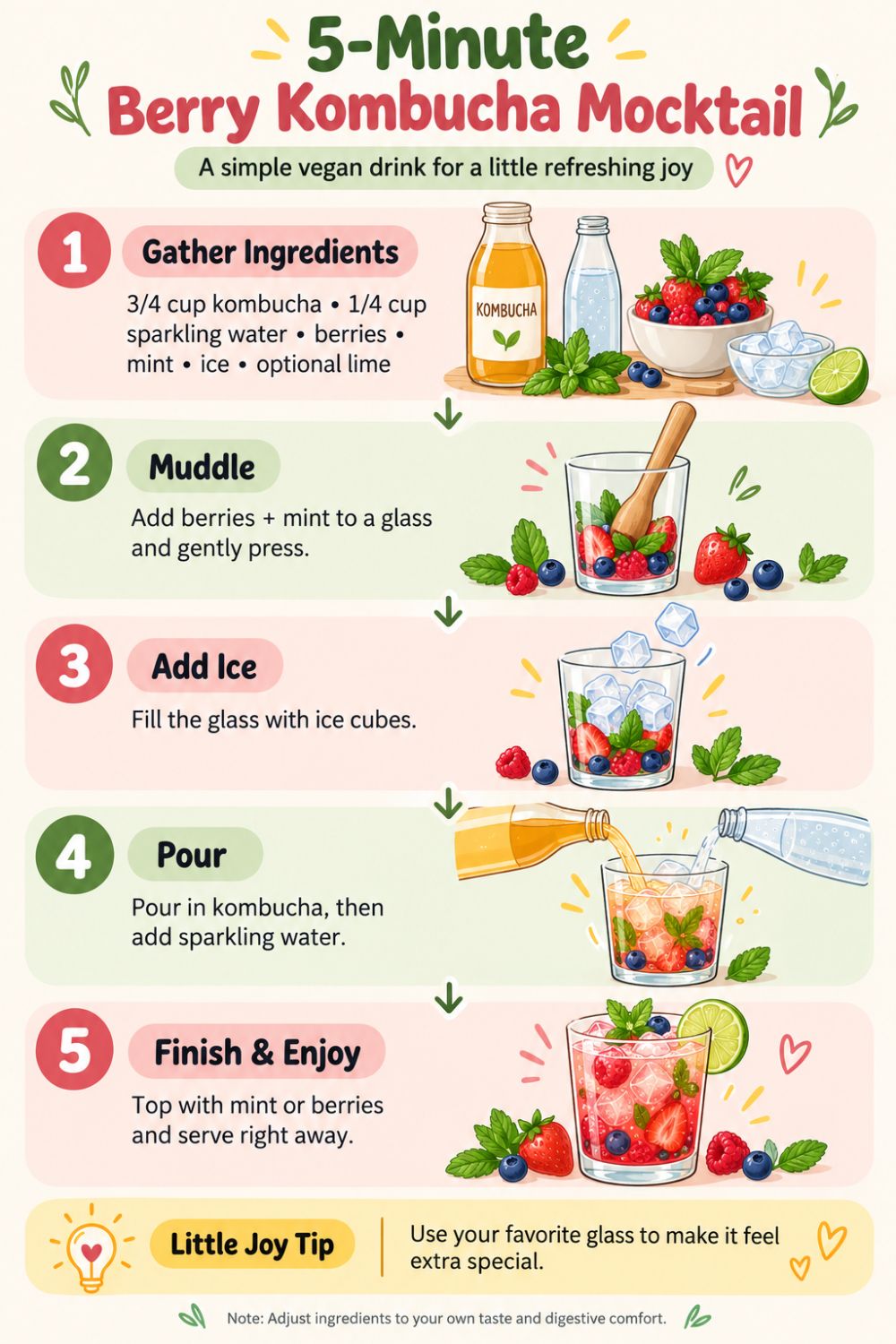
Easy Vegan Kombucha Drink Recipe: Berry Mint Mocktail
Prep time: 5 minutes
Servings: 1
Difficulty: Very easy
Equipment: Glass, spoon, and ice
You don’t need to ferment tea for a week to make something delicious with kombucha.
This quick vegan kombucha drink is perfect for a sunny afternoon, a cozy self-care evening, or a get-together when you want something refreshing and a little special.
Ingredients
- ¾ cup (180 ml) chilled, ready-to-drink kombucha
- ¼ cup (60 ml) cold sparkling water
- 3–4 strawberries or a small handful of raspberries
- 3–4 fresh mint leaves
- Ice cubes
- Optional: a squeeze of lime
Instructions
- Add the berries and mint to a tall glass.
- Gently press them with a spoon to release some flavor.
- Fill the glass with ice cubes.
- Pour in the chilled kombucha.
- Add sparkling water and stir gently.
- Garnish with mint or fresh berries and enjoy immediately.
Másolás
My little joy tip: Serve your kombucha in your favorite glass instead of drinking it straight from the bottle.
It takes only a few extra seconds, but it can make an everyday drink feel like a lovely little occasion.
IBS note: Berries, citrus, carbonation, and acidity aren’t tolerated equally by everyone. Adjust the recipe to suit your own digestive triggers. The extra sparkling water may not be suitable if bubbles worsen your bloating.
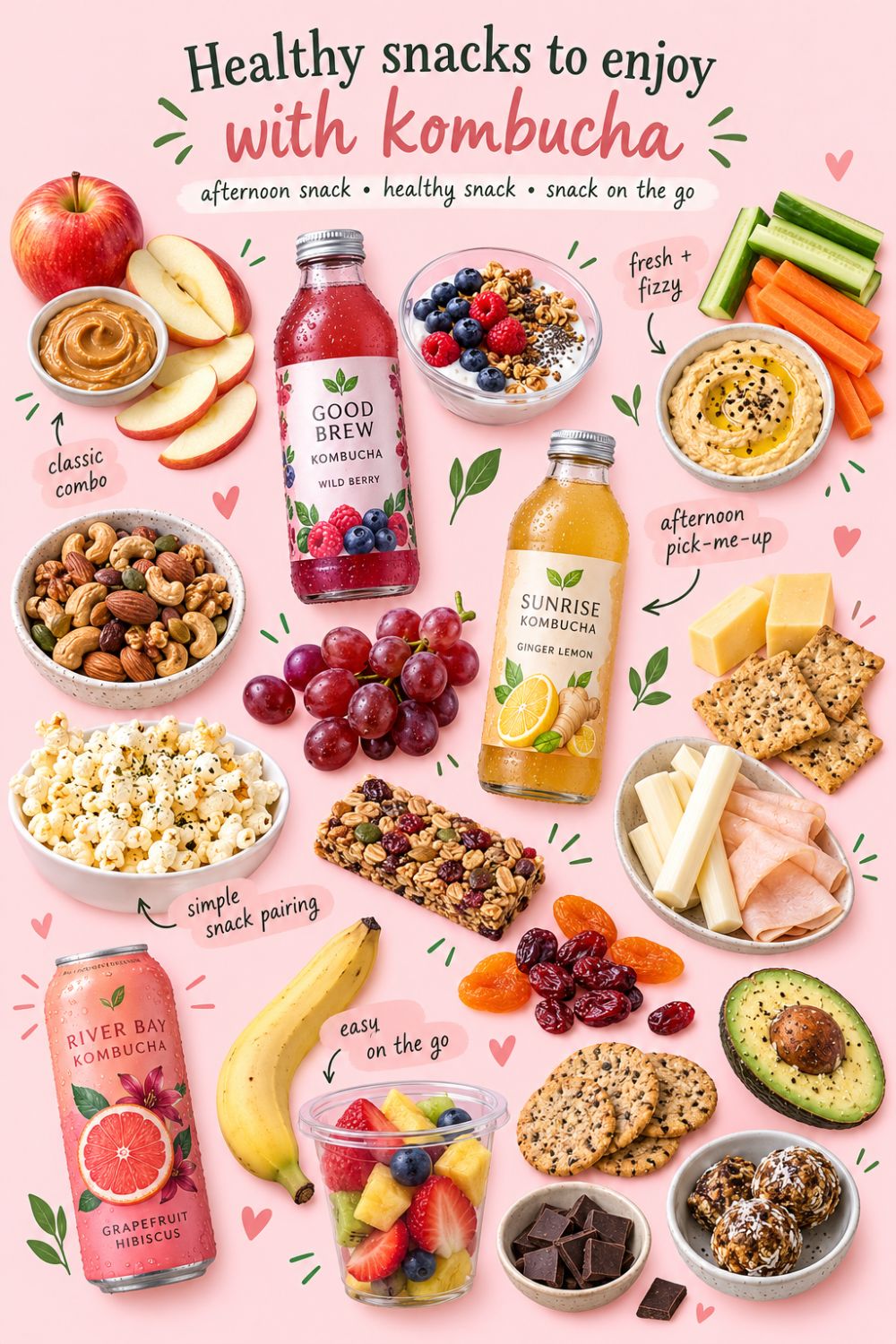
Want to turn your refreshing drink into a proper afternoon break? Pair it with something satisfying and easy to prepare. Here are some of my favorite simple snack combinations for energy and focus that don’t require complicated meal planning.
How to Make Kombucha at Home with a SCOBY
Wondering how to make kombucha from scratch?
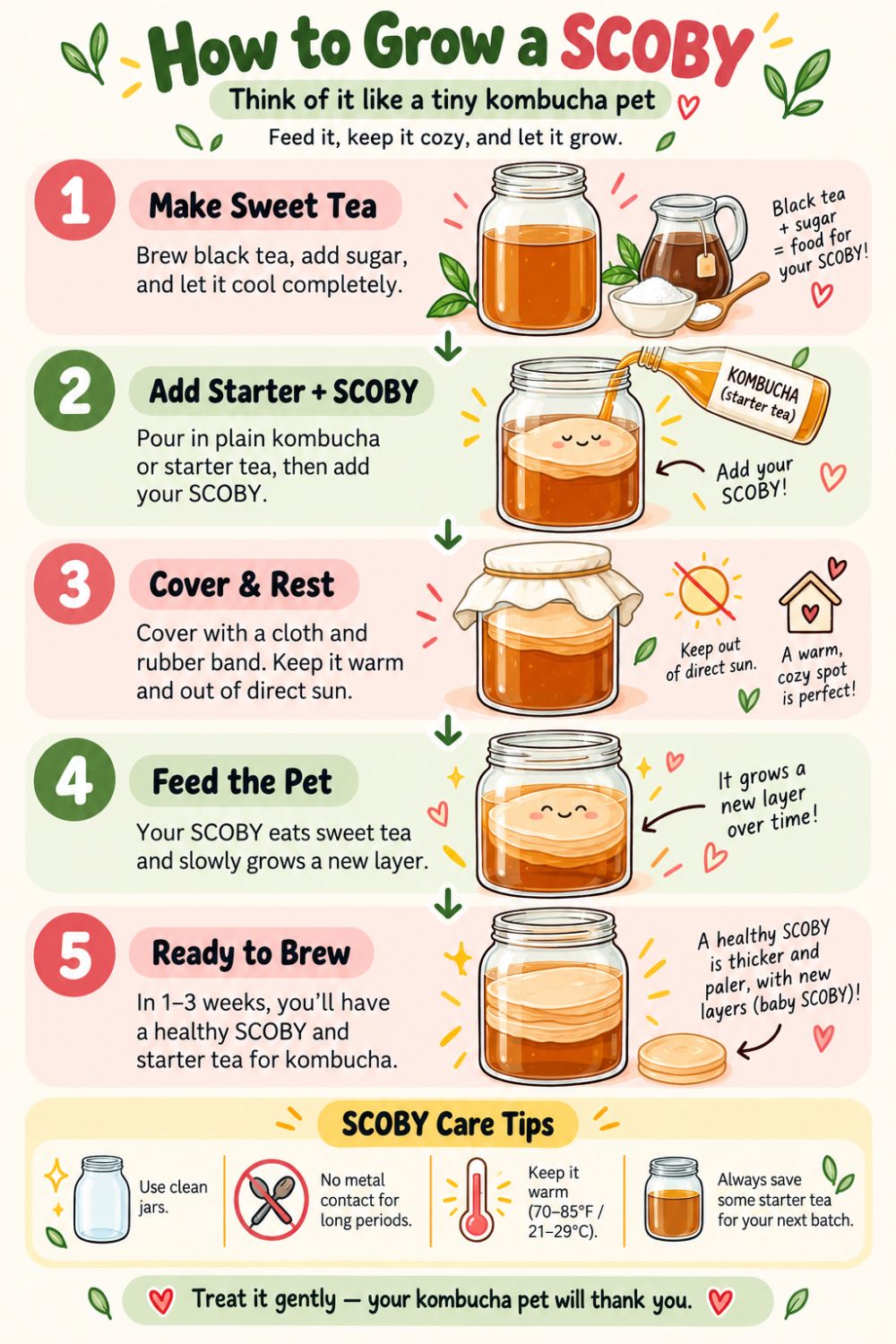
Traditional homemade kombucha requires a SCOBY and a properly prepared starter liquid. Unlike the quick mocktail above, fermentation usually takes 7–10 days.
The process generally involves preparing sweetened tea, cooling it, adding the SCOBY and starter, and fermenting in a clean container under controlled conditions.
Home fermentation requires care, including suitable acidity, sanitation, temperature control, and proper storage.
For a tested method, use the National Center for Home Food Preservation’s kombucha recipe.
Home-brewed kombucha may become contaminated or develop unpredictable levels of alcohol and acidity. Never drink a batch showing signs of mold, and don’t rely on taste alone to determine whether fermentation was safe.
Can You Make Kombucha Without a SCOBY?
If you’re searching for a kombucha recipe without SCOBY, there’s an important difference to understand.
You can make a kombucha-inspired fizzy tea with chilled green tea, a little fruit juice, and sparkling water.
However, this isn’t traditionally fermented kombucha.
And adding regular vinegar to tea doesn’t recreate the microorganisms or fermentation process of real kombucha.
For a quick homemade drink without maintaining a fermentation culture, using ready-made kombucha as your base is usually the easiest option.
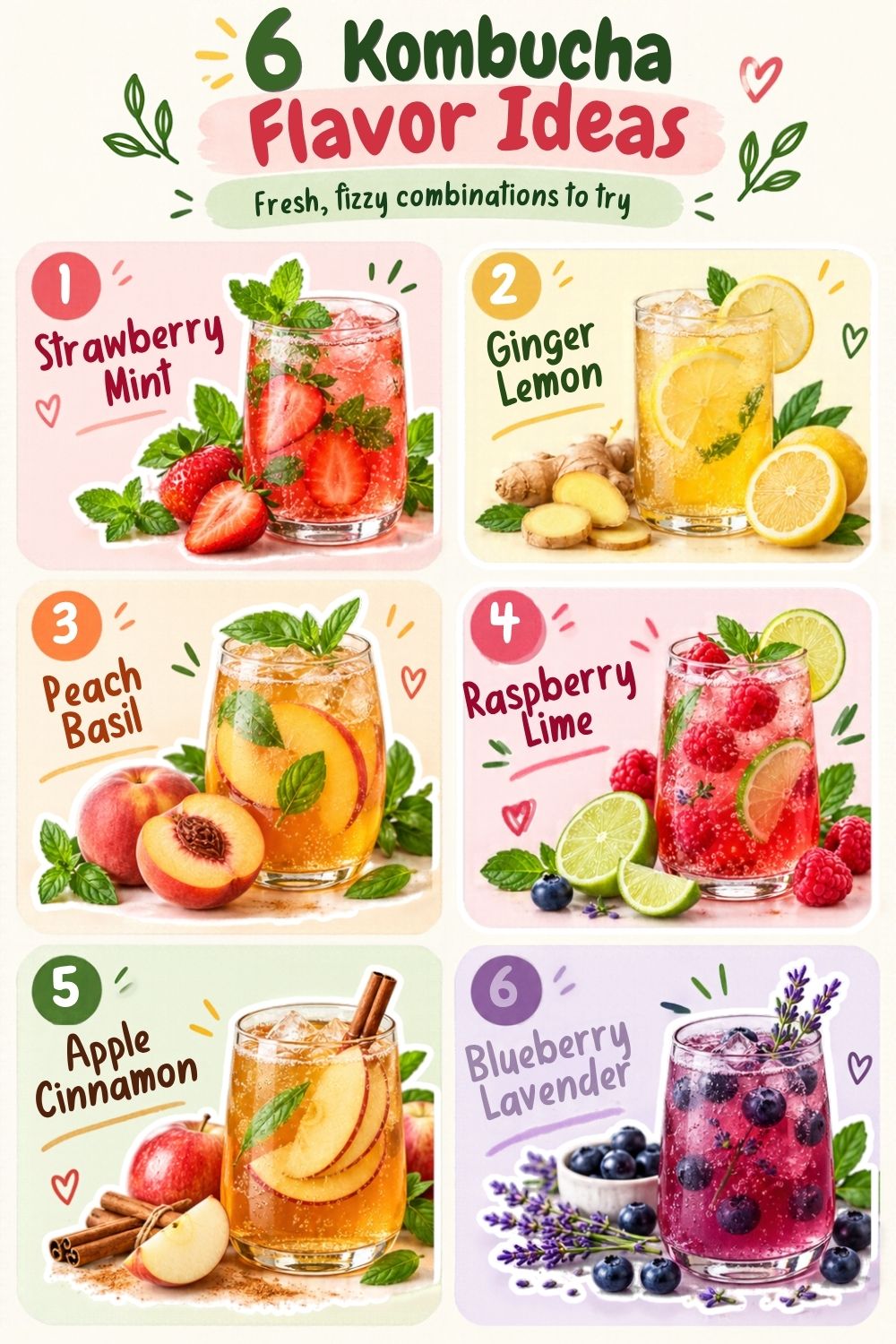
5 Kombucha Flavors to Try
One of the best things about kombucha is how easily you can experiment with flavors.
These combinations work beautifully for quick drinks made with ready-to-drink kombucha.
| Flavor | What to add |
|---|---|
| Strawberry Mint | Fresh strawberries and mint |
| Ginger Citrus | Fresh ginger and lemon |
| Peach Basil | Peach slices and basil |
| Raspberry Lime | Raspberries and lime |
| Apple Cinnamon | Apple slices and a cinnamon stick |
You can use these combinations as simple garnishes and mix-ins immediately before serving.
If you want to add fruit during a second fermentation, follow a tested fermentation method instead. Sealed bottles can build up dangerous pressure.
Can Kombucha Help With ADHD or Dopamine?
Since this is DopaMenu, it’s worth asking: does kombucha have anything to do with dopamine or ADHD?
The short answer is that there isn’t convincing clinical evidence that kombucha increases dopamine levels or treats ADHD symptoms.
Researchers are studying connections between the gut microbiome and the brain, often referred to as the gut-brain axis.
However, research into probiotics and ADHD remains inconclusive.
For example, a systematic review and meta-analysis of clinical trials found no significant overall improvements in core ADHD symptoms from probiotic supplementation compared with placebo.
That doesn’t mean kombucha can’t have a place in an ADHD-friendly lifestyle.
It just means the reason might be much simpler.
Managing ADHD and digestive sensitivities at the same time can make everyday eating and drinking decisions surprisingly complicated. I explore this connection in more detail in my guide to IBS and ADHD, including how forgotten meals can contribute to bloating.
The DopaMenu perspective: small joys and sensory experiences
For me, DopaMenu is about finding approachable ways to make everyday life feel a little more enjoyable.
Not every pleasant experience needs to optimize your brain chemistry.
Sometimes, it’s enough to have something refreshing to look forward to.
Kombucha can offer:
- Sensory variety: Fizzy texture, interesting flavors, and refreshing temperature.
- A tiny creative activity: Mixing fruit, herbs, and ice takes just a few minutes.
- A simple ritual: Making a special drink can become an enjoyable break in your day.
- An easy social option: Something different to order when you don’t feel like drinking alcohol.
The appeal isn’t a scientifically proven dopamine boost from kombucha itself.
It’s the possibility of turning a very ordinary activity into a small moment of enjoyment.
And those moments matter, too.
Making a colorful kombucha mocktail could even become one of the little treats on your personal dopamine menu. If you love the idea of collecting simple activities that make everyday life more enjoyable, explore my 75+ dopamine menu examples for more inspiration.
Is Kombucha a Good Alternative to Alcohol?
For some occasions, absolutely.
I personally love having kombucha as another choice when everyone else is drinking wine, cocktails, or beer.
Its acidity, interesting flavors, and carbonation make it feel more like a special drink than plain water.
You can also serve it in a cocktail glass with ice, berries, and fresh herbs.
But there’s one thing to know: kombucha isn’t always completely alcohol-free.
Fermentation naturally produces some alcohol, and amounts vary between products.
In the United States, kombucha containing 0.5% alcohol by volume or more is subject to federal alcohol beverage regulations.
If you need to avoid alcohol entirely, check the product label carefully and choose a verified 0.0% alternative when appropriate.
How to Choose a Good Kombucha Drink
Not sure what to look for in a store?
Start with a few basics.
Check the sugar content. Fermentation consumes some sugar, but the amount remaining can vary considerably.
Read the ingredients. If you’re vegan, check for honey. If you have IBS, pay attention to ingredients you know trigger symptoms.
Consider the flavor. Fruity versions may be easier for beginners, while original kombucha has a more pronounced fermented-tea taste.
Follow storage instructions. Some products require refrigeration, and live products may continue to change during storage.
Don’t buy it for miracle claims. Choose a drink you actually enjoy, rather than expecting it to fix your digestion, immunity, or mood.
Frequently Asked Questions About Kombucha
Is kombucha vegan and dairy-free?
Traditional kombucha is naturally vegan and dairy-free because it is made from tea, sugar, water, and a SCOBY. Check commercial flavorings for animal-derived ingredients.
Does kombucha contain caffeine?
Usually, yes. Since kombucha is traditionally brewed from black or green tea, some caffeine may remain after fermentation. The amount varies by product.
Is kombucha a probiotic drink?
Some unpasteurized kombucha products contain living microorganisms. However, that doesn’t automatically mean they contain clinically established probiotic strains or provide proven probiotic benefits.
Can I drink kombucha every day?
Some healthy adults enjoy it regularly, but there is no established amount everyone should drink for health benefits. Consider sugar, acidity, alcohol content, caffeine, and your individual tolerance.
Is kombucha good for IBS?
Not necessarily. It can be enjoyable for some people, but carbonation, acidity, and fermentable carbohydrates may worsen symptoms in others.
Is kombucha safe during pregnancy?
Because kombucha may contain alcohol, live microorganisms, and potentially variable levels of caffeine, pregnant people are generally advised to avoid it, particularly homemade or unpasteurized varieties. Ask your healthcare professional for individualized guidance.
Is Kombucha the Same as Taking Probiotics?
Not exactly! Kombucha is a fermented tea that may contain live microorganisms, but that doesn’t automatically mean it provides the same benefits as a clinically studied probiotic supplement.
If you’re interested in supporting your gut health, it’s worth understanding the difference between fermented foods and specific probiotic strains. I’ve put together a guide to the best probiotics for bloating, including what the research says and why different strains may have different effects.
And remember, kombucha isn’t necessarily the best choice for everyone with a sensitive stomach, especially if carbonated drinks tend to make you feel bloated.
What are the best kombucha flavors for beginners?
Strawberry, peach, raspberry, ginger, and other gently fruity varieties are great starting points if you prefer a refreshing, less intensely sour drink.
And if you’re curious about the bigger picture of food, mood, and everyday energy, you might also enjoy my guide to 50 dopamine-friendly foods. It’s full of approachable ideas for building a food routine that works with your real life.
Final Thoughts: A Little Fizz, a Little Joy
Kombucha isn’t a miracle drink.
It won’t magically improve your focus, fix your gut, or transform your wellness routine.
But it can be a delicious way to add something different to your day.
Personally, I enjoy its tangy flavor, playful bubbles, and the fact that it gives me another interesting drink option, especially when I don’t want alcohol.
For me, that’s where kombucha fits into the DopaMenu philosophy.
Small pleasures. Simple choices. A little more enjoyment in everyday life.
And sometimes, all it takes is a chilled glass of something fizzy.
Research and further reading
- Fraiz et al. (2025). Benefits of Kombucha Consumption: A Systematic Review of Clinical Trials Focused on Microbiota and Metabolic Health
- Ecklu-Mensah et al. (2024). Modulating the Human Gut Microbiome and Health Markers through Kombucha Consumption
- Monash University — Fermented Drinks and the Low FODMAP Diet
- Probiotics and ADHD — Clinical Trial Meta-Analysis
- National Center for Home Food Preservation — Kombucha Tea
Disclaimer: This article is for general educational purposes and is not intended as medical advice. Digestive conditions, medication use, and individual food tolerances vary.