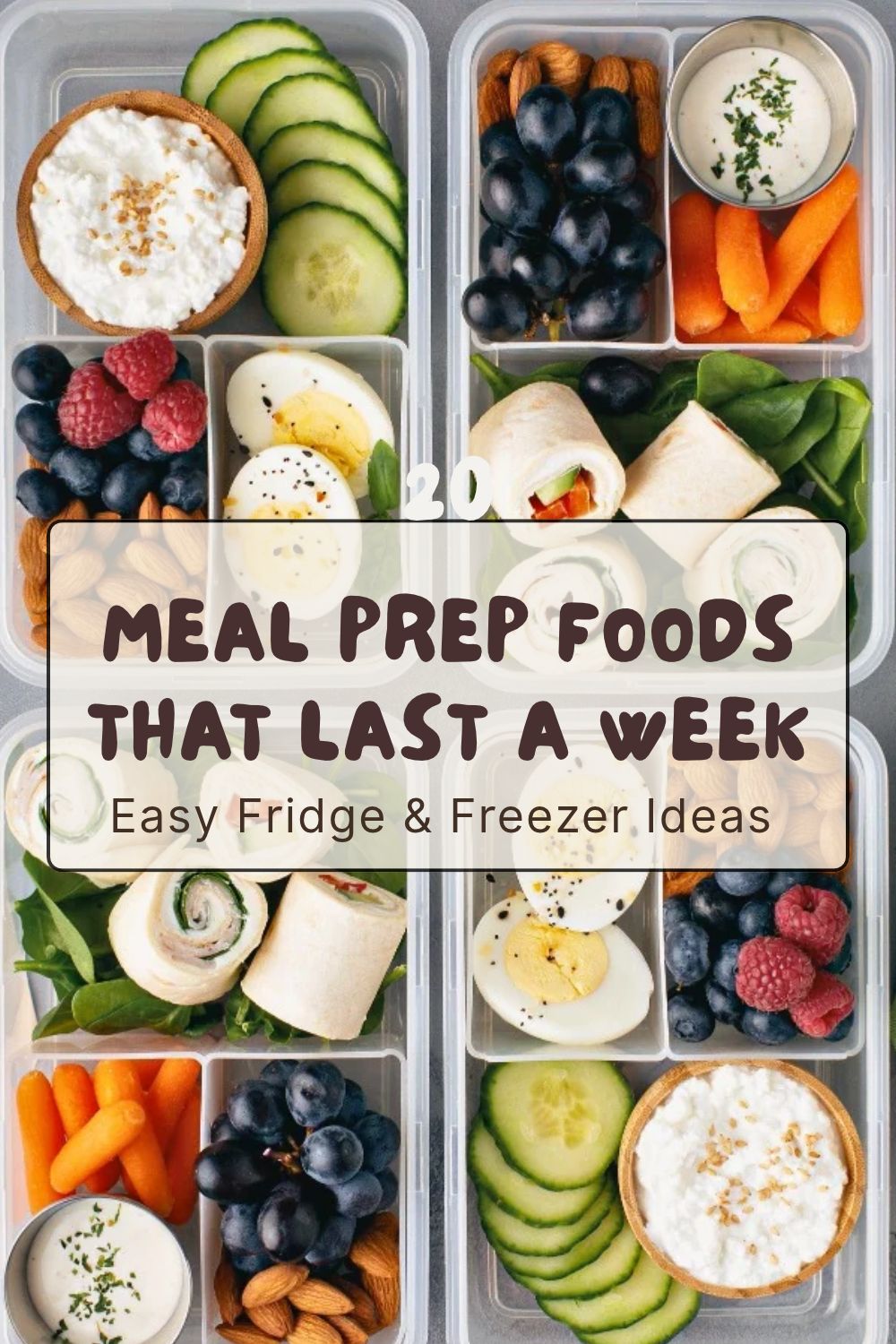
20 Meal Prep Foods That Last a Week (Fridge & Freezer Guide)
Looking for meal prep foods that last a week without spending your entire Sunday cooking?
Maybe you’ve tried meal prepping before. You made a huge batch of chicken, rice, and vegetables, packed everything into matching containers, and felt incredibly organized.
But by Thursday, you were already tired of eating the same thing.
Or worse, you weren’t sure whether the food was still safe to eat.
Here’s the part that often gets overlooked in meal prep inspiration: most cooked meals shouldn’t sit in the refrigerator for seven days.
According to the USDA, most cooked leftovers should be eaten within 3–4 days when stored properly in the refrigerator. If you’re preparing food for the entire week, freezing portions for later is usually the safer approach.
That doesn’t mean weekly meal prep is impossible.
It just means you need a slightly smarter system.
Instead of preparing seven identical meals and hoping they stay fresh, you can combine refrigerator-friendly ingredients, freezer meals, and simple foods that take only a few minutes to assemble.
And if you struggle with meal planning, decision fatigue, or finding the energy to cook every day, this flexible approach can feel much more manageable.
Let’s look at 20 easy meal prep foods, what freezes well, and how to organize a full week of meals without making food preparation another overwhelming project.
Can Meal Prep Really Last a Whole Week?
Yes — but not if you keep every cooked meal in the refrigerator for seven days.
The easiest way to prepare food for an entire week is to divide it into two categories:
- Days 1–3 or 4: Meals stored safely in the refrigerator.
- Days 4–7: Meals frozen soon after cooking, then thawed and reheated safely when needed.
You can also use shelf-stable ingredients, frozen vegetables, and fresh foods that require little preparation.
For safety, the USDA recommends keeping your refrigerator at or below 40°F (4°C) and your freezer at or below 0°F (-18°C).
Refrigerate perishable foods within two hours of preparation, or within one hour if they’re exposed to temperatures above 90°F (32°C).
Remember: Food can contain harmful bacteria even when it looks and smells normal.
20 Best Meal Prep Foods for the Week
Not every food behaves the same way after refrigeration or freezing.
Some ingredients keep their texture beautifully, while others become soggy, mushy, or watery.
The following ideas are organized by how they’re most useful in a weekly meal prep routine.
1. Cooked Chicken
Best for: Rice bowls, wraps, salads, sandwiches
Storage: Refrigerate cooked chicken for 3–4 days or freeze individual portions.
Chicken is one of the most versatile proteins for meal prep.
You can season it simply, cook it thoroughly, and use it in several different meals.
Easy combinations:
- Chicken, rice, and broccoli
- Chicken tortilla wraps
- Chicken pasta bowls
- Chicken with roasted vegetables
Make it easier: Cook chicken with a simple seasoning, then add different sauces throughout the week.
This helps create variety without cooking several separate recipes.
2. Cooked Rice
Best for: Stir-fries, grain bowls, burrito bowls
Storage: Refrigerate promptly and use within 3–4 days, or freeze portions for later.
Rice is an affordable meal prep staple that works with many different ingredients.
Cook a batch, cool it quickly in shallow containers, and store it in the refrigerator or freezer promptly.
Easy combinations:
- Chicken and vegetable rice bowls
- Egg fried rice
- Black bean burrito bowls
- Tofu and vegetable bowls
Important: Never leave cooked rice sitting at room temperature for hours. Rice can contain Bacillus cereus spores, which may survive cooking, so quick cooling and proper storage are especially important.
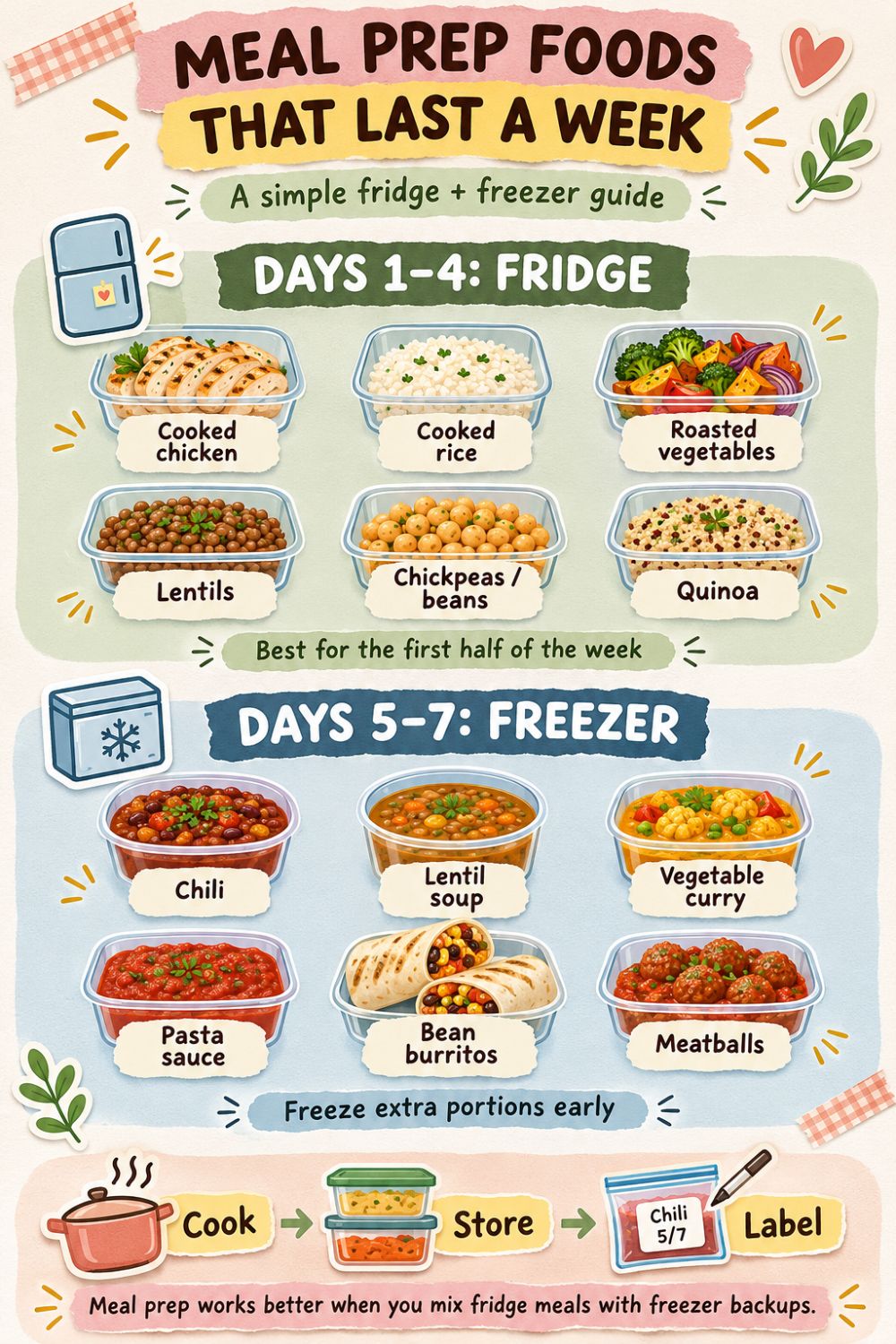
3. Roasted Vegetables
Best for: Lunch bowls, side dishes, wraps
Storage: Generally treat cooked vegetable dishes as 3–4-day refrigerated leftovers, or freeze suitable portions.
Roasted vegetables are a great way to add variety to your meals.
Try:
- Carrots
- Bell peppers
- Broccoli
- Zucchini
- Sweet potatoes
Make it easier: Roast several vegetables on the same baking sheet, using similar-size pieces and adjusting cooking times as needed.
For the best texture, use refrigerated portions earlier in the week.
4. Cooked Lentils
Best for: Soups, grain bowls, curries, wraps
Storage: Refrigerate cooked lentil dishes for 3–4 days or freeze them.
Lentils are affordable, versatile, and useful for plant-based meal prep.
They work particularly well in soups, stews, and sauces.
Easy ideas:
- Lentil soup
- Lentil and vegetable curry
- Lentil taco filling
- Lentil grain bowls
Why they’re practical: A single batch can become several different meals with different toppings or seasonings.
5. Black Beans
Best for: Burrito bowls, tacos, soups, wraps
Storage: Refrigerate cooked or opened beans promptly and use within a few days, or freeze prepared portions.
Canned black beans are especially convenient because they require almost no preparation.
Rinse and drain them, then add them to your meals.
Easy combinations:
- Black bean tacos
- Rice and bean bowls
- Bean and cheese quesadillas
- Black bean soup
Low-energy shortcut: Keep unopened cans in your pantry and prepare portions only when needed.
6. Chickpeas
Best for: Salads, grain bowls, wraps, curries
Storage: Refrigerate prepared chickpea dishes for 3–4 days, or freeze suitable cooked recipes.
Chickpeas are useful for quick meals because they pair well with vegetables, rice, and sauces.
Easy combinations:
- Chickpea curry
- Mediterranean grain bowls
- Mashed chickpea wraps
- Chickpea and roasted vegetable bowls
If you’re making a fresh salad, consider keeping the dressing separate until serving.
7. Cooked Quinoa
Best for: Grain bowls, salads, side dishes
Storage: Refrigerate cooked quinoa for approximately 3–4 days or freeze portions.
Quinoa is a flexible grain-like seed that can be served warm or cold.
It works well with roasted vegetables, beans, and cooked proteins.
Make it easier: Freeze cooked quinoa in meal-sized portions and reheat it when needed.
8. Sweet Potatoes
Best for: Meal prep bowls, side dishes, stuffed potatoes
Storage: Refrigerate cooked sweet potatoes for 3–4 days or freeze suitable prepared portions.
Sweet potatoes can be baked, roasted, or mashed ahead of time.
Easy meal ideas:
- Sweet potato and black bean bowls
- Mashed sweet potato with chicken
- Roasted sweet potato and chickpea bowls
Mashed sweet potatoes generally freeze better than crisp roasted pieces.
9. Cooked Ground Turkey or Beef
Best for: Tacos, pasta sauces, burrito bowls
Storage: Refrigerate cooked ground meat for 3–4 days or freeze portions.
Ground meat is useful because you can prepare a batch and use it in several different dishes.
Try:
- Taco-seasoned meat
- Tomato-based pasta sauce
- Rice bowl toppings
- Stuffed peppers
Cook ground beef to 160°F (71°C) and ground poultry to 165°F (74°C).
10. Hard-Boiled Eggs
Best for: Breakfast, snack plates, salads
Storage: Refrigerate fully cooked hard-boiled eggs for up to one week.
This is a useful exception to the general 3–4-day leftover recommendation.
Hard-boiled eggs are convenient to prepare ahead and use in several ways.
Easy ideas:
- Egg and crackers snack plates
- Eggs with toast
- Sliced eggs on salads
- Simple breakfast boxes
Keep them refrigerated and don’t freeze whole hard-boiled eggs.
10 Meal Prep Foods That Freeze Well
The freezer is what makes weekly meal prep much more realistic.
Instead of trying to keep cooked food fresh in the refrigerator for seven days, freeze several portions soon after preparing them.
That way, you have meals available later in the week without needing to cook again.
11. Chili
Best for: Easy lunches, dinners, high-protein meal prep
Chili is one of the most practical freezer-friendly meals.
It can include beans, tomatoes, vegetables, and your preferred protein.
Meal prep idea: Prepare a large pot, refrigerate the portions you’ll eat within 3–4 days, and freeze the rest promptly.
Serve with: Rice, bread, baked potatoes, or tortillas.
12. Lentil Soup
Best for: Budget-friendly lunches
Lentil soup freezes well and can be made with affordable pantry ingredients.
Try lentils, carrots, celery, tomatoes, vegetable broth, and your favorite seasonings.
Make it easier: Freeze individual servings so you only need to thaw what you plan to eat.
13. Vegetable Curry
Best for: Vegetarian meal prep
A simple curry with vegetables and chickpeas can be a useful addition to your freezer.
Serve it with freshly prepared or safely thawed rice.
Texture tip: Some vegetables soften after freezing, so curries with sturdier vegetables tend to work particularly well.
14. Pasta Sauce
Best for: Quick weeknight dinners
Instead of freezing fully assembled pasta meals, prepare and freeze the sauce.
Try:
- Tomato and vegetable sauce
- Lentil bolognese
- Ground turkey tomato sauce
- Simple marinara
Then cook fresh pasta when you’re ready to eat.
This can give you a fresher texture with very little additional effort.
15. Burrito Filling
Best for: Tacos, wraps, rice bowls
Prepare a simple mixture of beans, cooked meat or vegetables, and seasonings.
Freeze in portions.
Later, you can use the filling in tacos, burritos, or bowls.
Make it easier: Add fresh lettuce, sour cream, and other cold toppings after reheating.
16. Breakfast Burritos
Best for: Easy make-ahead breakfasts
Breakfast burritos are convenient for busy mornings.
Fill tortillas with thoroughly cooked eggs, cooked potatoes, beans, and cheese.
Let the fillings cool safely, wrap the burritos, and freeze promptly.
Reheat thoroughly before eating.
17. Homemade Meatballs
Best for: Pasta, sandwiches, rice bowls
Fully cooked meatballs are useful freezer staples.
You can freeze them with tomato sauce or separately.
Easy combinations:
- Meatballs and spaghetti
- Meatball sandwiches
- Meatballs with rice and vegetables
Reheat leftovers to 165°F (74°C).
18. Vegetable Soup
Best for: Light lunches, simple dinners
Vegetable-based soups are often convenient to freeze in individual portions.
Try combinations of carrots, potatoes, lentils, beans, and broth.
Texture tip: Some potatoes and dairy-based ingredients may change texture after freezing.
If you want the best consistency, add cream or delicate toppings after reheating.
19. Homemade Bean Burritos
Best for: Quick lunches, budget meals
Fill tortillas with seasoned beans, cooked rice, and cheese.
Wrap individually and freeze.
Avoid adding ingredients that may become watery, such as fresh lettuce or juicy tomatoes, before freezing.
Add those when serving.
20. Lasagna or Pasta Bake
Best for: Family dinners, comfort food
Pasta bakes are useful because they can be divided into individual portions.
You can prepare a vegetable lasagna, tomato-based pasta bake, or another favorite casserole.
Freeze portions promptly after safe cooling.
Make it easier: Use individual freezer-safe containers to avoid reheating an entire large dish.
Which Meal Prep Foods Last the Longest?
Here’s a quick comparison to help you decide what to prepare.
| Food | Refrigerator | Freezer |
|---|---|---|
| Cooked chicken | 3–4 days | Good option |
| Cooked rice | 3–4 days with prompt chilling | Good option |
| Roasted vegetables | 3–4 days | Varies by vegetable |
| Lentil dishes | 3–4 days | Good option |
| Bean dishes | 3–4 days | Good option |
| Cooked quinoa | About 3–4 days | Good option |
| Cooked sweet potatoes | 3–4 days | Mashed freezes particularly well |
| Cooked ground meat | 3–4 days | Good option |
| Hard-boiled eggs | Up to 7 days | Not recommended |
| Soups and stews | 3–4 days | Good option |
| Chili | 3–4 days | Good option |
| Cooked pasta bake | 3–4 days | Good option |
These are general storage guidelines for properly handled foods kept at 40°F (4°C) or below. Freezer suitability refers to typical texture and quality, not a guarantee for every recipe. For detailed storage recommendations, consult FoodSafety.gov.
How to Meal Prep for 7 Days Without Eating the Same Thing
One of the reasons meal prep can become frustrating is repetition.
You spend time preparing food, only to lose interest in it halfway through the week.
Instead of cooking seven identical meals, try making a few flexible ingredients that can be combined in different ways.
Step 1: Choose Two Proteins
For example:
- Cooked chicken
- Black beans
This gives you both an animal-based and a plant-based option.
Step 2: Prepare Two Carbohydrate Sources
For example:
- Rice
- Sweet potatoes
You can also use tortillas, pasta, or quinoa.
Step 3: Add Two Vegetables
Choose vegetables you genuinely enjoy.
For example:
- Broccoli
- Bell peppers
Frozen vegetables work well if you want to reduce chopping.
Step 4: Choose Two Sauces
For example:
- Tomato salsa
- Yogurt-based dressing
Keep sauces in separate containers when appropriate.
Step 5: Mix and Match
Now you can make several combinations without preparing completely different meals.
| Meal | Ingredients |
|---|---|
| Chicken rice bowl | Chicken + rice + broccoli |
| Burrito bowl | Black beans + rice + peppers + salsa |
| Chicken wrap | Chicken + tortilla + vegetables |
| Sweet potato bowl | Sweet potato + black beans + salsa |
| Chicken vegetable plate | Chicken + broccoli + sweet potato |
| Bean quesadilla | Beans + tortilla + cheese |
Freeze portions intended for later in the week rather than keeping cooked ingredients refrigerated for seven days.
A Simple 7-Day Meal Prep Plan
Here’s an example of how you could organize a week without preparing a new meal every day.
| Day | Meal idea | Storage plan |
|---|---|---|
| Monday | Chicken rice bowl | Refrigerated |
| Tuesday | Black bean burrito bowl | Refrigerated |
| Wednesday | Chicken wrap | Refrigerated cooked filling |
| Thursday | Lentil soup | Refrigerated if within safe storage time |
| Friday | Chili with rice | Frozen portions, thawed safely |
| Saturday | Vegetable curry | Frozen portion, thawed safely |
| Sunday | Homemade bean burrito | Frozen portion, reheated |
The most important step is preparing and freezing the Friday–Sunday portions early, rather than waiting until Thursday or Friday to freeze leftovers that have already been sitting in the fridge.
You can also leave a few meals completely unplanned. Meal prep is supposed to make life easier, not prevent you from changing your mind.
Low-Energy Meal Prep: The 3–2–1 Method
If traditional meal prep feels overwhelming, try a smaller version.
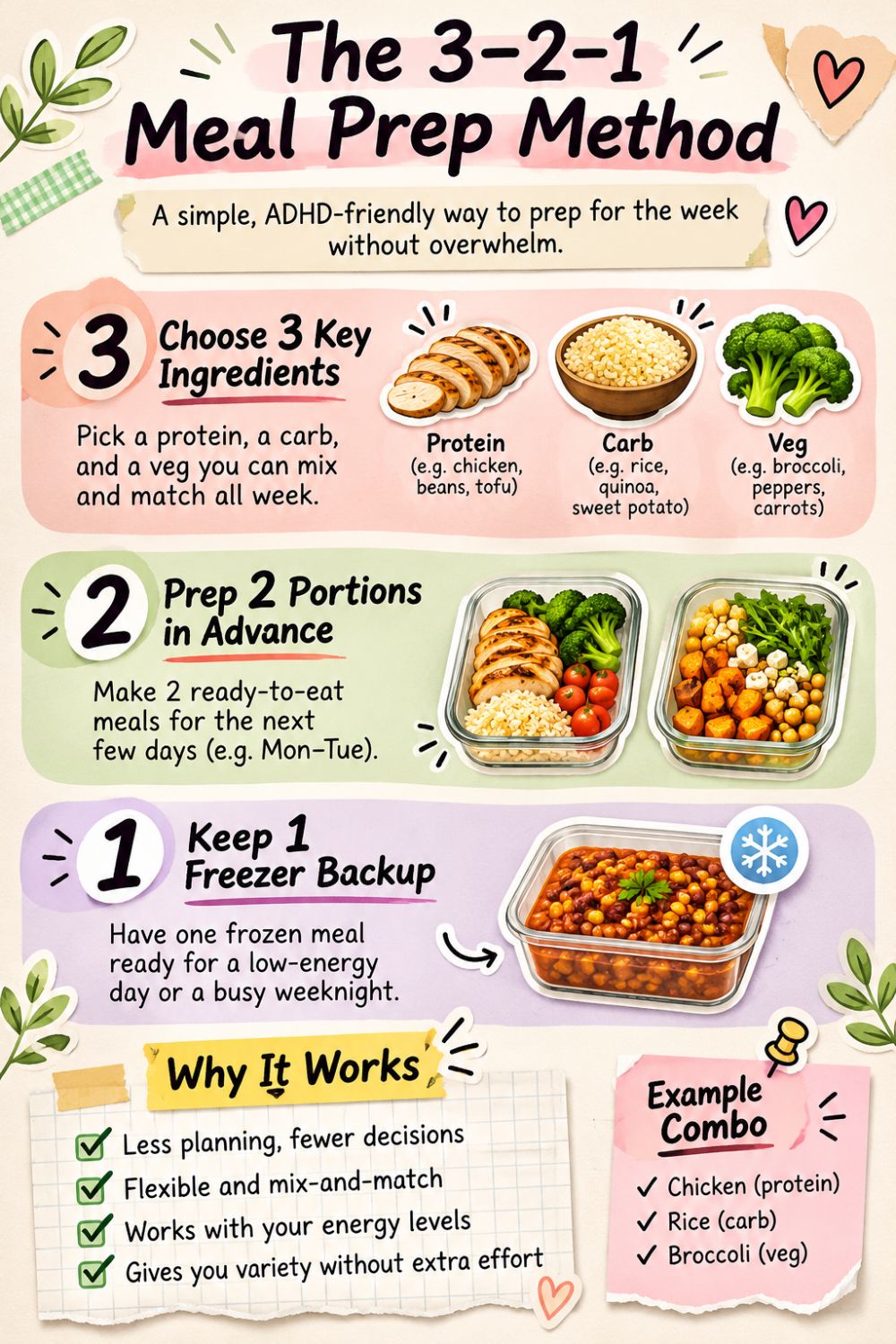
I like the idea of using a simple 3–2–1 meal prep method:
- 3 easy ingredients: Choose three foods you can combine in multiple ways.
- 2 prepared portions: Make or assemble two meals in advance.
- 1 freezer backup: Keep one ready-to-reheat meal available for a difficult day.
For example:
Three ingredients: Rice, black beans, and frozen vegetables.
Two portions: Two burrito bowls for the next couple of days.
One backup: A frozen serving of lentil soup.
You don’t need to spend three hours preparing twenty identical containers.
You can start with a system that takes much less effort.
Make Meal Prep Easier When You Have ADHD
Meal prepping can sound simple in theory.
But there are several steps involved: planning, shopping, preparing ingredients, cooking, portioning, labeling, storing, and cleaning up.
When executive functioning is difficult, all those small steps can make the process feel surprisingly exhausting.
Here are a few ideas for making meal prep more manageable.
Choose Familiar Foods
Don’t attempt five completely new recipes in one afternoon.
Start with foods you already know how to make.
Use Convenient Ingredients
Frozen vegetables, canned beans, pre-washed greens, and ready-to-use sauces can reduce preparation time.
There’s nothing wrong with using shortcuts.
Prepare Components Instead of Complete Meals
Cook one protein, prepare one side dish, and keep a few convenient ingredients available.
This gives you flexibility throughout the week.
Keep Your Freezer Visible and Organized
Use clearly labeled containers or freezer bags.
Write the food name and preparation date on each package.
That way, you don’t have to guess what’s inside.
Make a Backup Meal List
Keep a list of easy meals you can make when your original plan doesn’t work.
For example:
- Frozen soup
- Bean quesadilla
- Eggs and toast
- Pasta with ready-made sauce
- Rice with frozen vegetables
The goal isn’t perfect meal preparation.
It’s having a few realistic options available when you need them.
Food Safety Tips for Weekly Meal Prep
Food safety matters just as much as convenience.
A few simple habits can make your meal prep routine safer.
Refrigerate Food Promptly
Place perishable foods in the refrigerator within two hours of preparation.
Use shallow containers so cooked food cools more quickly.
Don’t Rely on Smell Alone
Food can contain harmful bacteria without obvious signs of spoilage.
If a prepared meal has been stored longer than recommended, discard it rather than tasting it to check.
Label Your Containers
Include the preparation date.
You can also write a use-by date based on the appropriate storage guidance.
Freeze Extra Portions Early
If you won’t eat a cooked meal within 3–4 days, freeze it promptly.
Thaw Food Safely
Thaw frozen meals in the refrigerator, in cold water using safe handling methods, or in the microwave according to food safety guidance.
If you thaw food in cold water or the microwave, cook or reheat it immediately.
Reheat Thoroughly
Reheat leftovers to an internal temperature of 165°F (74°C).
Use a food thermometer when needed.
Frequently Asked Questions
What meal prep foods last a week?
Hard-boiled eggs can be refrigerated for up to seven days, while many cooked meals are recommended for only 3–4 days in the fridge. For a full week of meal prep, freeze portions of soups, chili, cooked proteins, and other suitable meals.
Can meal prep last seven days in the fridge?
Most cooked meal prep dishes should not be kept in the refrigerator for seven days. USDA guidance generally recommends consuming cooked leftovers within 3–4 days or freezing them for later use.
What foods freeze well for meal prep?
Chili, lentil soup, vegetable curry, meatballs, cooked beans, pasta sauces, burritos, and many casseroles can freeze well when prepared and stored correctly.
How do you meal prep for a whole week?
Prepare meals for the first three or four days, freeze portions for later in the week, and keep convenient ingredients available for quick assembly. Label everything and follow safe refrigeration and reheating guidance.
Can cooked rice last a week in the fridge?
A full week in the refrigerator isn’t recommended for cooked rice. Cool it promptly, refrigerate it safely, and use it within a few days or freeze portions for later.
Are meal prep salads good for the entire week?
Some sturdy ingredients, such as whole vegetables and unopened shelf-stable products, can be prepared or kept available in advance. However, assembled perishable salads still require appropriate refrigeration and storage limits. Keep wet dressings separate to improve texture.
What’s the easiest meal prep for beginners?
Start with one protein, one carbohydrate, and one vegetable. Prepare two or three meals and keep a frozen backup option rather than trying to organize an entire week immediately.
Can you freeze meal prep in glass containers?
Yes, if the containers are specifically labeled freezer-safe. Allow food to cool safely, leave appropriate space for expansion, and avoid sudden temperature changes that could crack the glass.
Final Thoughts: Meal Prep Should Make Your Week Easier
You don’t need a perfectly organized refrigerator filled with identical containers to benefit from meal prep.
And you definitely don’t need to spend an entire Sunday cooking.
Sometimes all it takes is preparing a few useful ingredients, freezing a couple of extra portions, and having one or two easy backup meals ready.
The best meal prep system isn’t necessarily the one that prepares the most food. It’s the one that saves you time and decisions without creating extra stress.
Start small.
Choose foods you actually enjoy.
Use your freezer.
And give yourself permission to keep the process flexible.
Because making everyday life easier is much more important than creating a perfect-looking meal prep routine.
Save this guide for later, and use it the next time you want to prepare food for a busy week without feeling overwhelmed.