ADHD Help for Adults: Where to Start, What Helps & Free Resources
Looking for ADHD help as an adult can feel surprisingly overwhelming.
You might be wondering whether you have ADHD, trying to understand a recent diagnosis, or simply looking for ways to make everyday life a little easier.
And then you open Google.
Suddenly, there are medications, therapists, ADHD coaches, productivity apps, planners, support groups, online communities, and hundreds of different tips.
Where are you supposed to start?
I understand that feeling.
As an adult who began recognizing ADHD patterns in my own life, I’ve spent a lot of time exploring why seemingly ordinary things — organizing tasks, managing time, starting projects, or switching between activities — can feel unexpectedly complicated.
What I’ve learned is that ADHD support doesn’t have to mean finding one perfect solution.
It can involve professional care, practical tools, understanding your own patterns, and making your environment easier to navigate.
In this guide, we’ll explore where adults can find ADHD help, what support is available with or without medication, which free resources are worth knowing about, and how to start making everyday life more manageable.
Quick Answer: What Help Is Available for Adults With ADHD?
Adult ADHD support generally falls into five areas:
| Type of support | What it can help with |
|---|---|
| Professional assessment | Understanding symptoms and exploring a diagnosis |
| Medical treatment | Managing ADHD symptoms when medication is appropriate |
| Therapy and ADHD-focused skills training | Developing strategies for attention, emotions, planning, and organization |
| Practical daily systems | Making tasks, routines, and responsibilities easier to manage |
| Peer support and free resources | Learning from credible information and connecting with other adults |
You don’t necessarily need every type of support.
The right combination depends on your symptoms, circumstances, access to healthcare, and the areas of life where you’re struggling most.
The National Institute of Mental Health explains that adult ADHD treatment may include medication, psychotherapy, and other behavioral approaches.
But what does getting help actually look like in real life?
Let’s start with the first step.
1. Where to Get ADHD Help as an Adult
If You Think You Might Have ADHD
You don’t need to be completely certain about ADHD before asking for professional advice.
In fact, an assessment is partly about understanding whether ADHD explains your experiences or whether another issue might be contributing.
ADHD can involve:
- Difficulty maintaining attention.
- Forgetfulness and losing track of belongings.
- Problems organizing and prioritizing tasks.
- Restlessness or impulsive decisions.
- Trouble starting and finishing activities.
- Difficulties managing time.
- Challenges with everyday responsibilities.
Symptoms differ between individuals.
Some adults experience obvious hyperactivity, while others primarily struggle with inattention, internal restlessness, or executive functioning.
Stress, anxiety, depression, sleep disorders, and other health conditions can sometimes produce overlapping difficulties.
A qualified healthcare professional can assess your history, current symptoms, and how they affect your life.
For a more personal perspective, I’ve written about what living with ADHD as an adult can actually feel like.
What Happens During an Adult ADHD Assessment?
Although the process varies between healthcare systems, an assessment may involve:
- Discussing current symptoms and everyday difficulties.
- Reviewing childhood experiences and developmental history.
- Completing standardized screening or assessment questionnaires.
- Exploring how symptoms affect work, relationships, education, and daily responsibilities.
- Considering other possible explanations or coexisting conditions.
A self-assessment questionnaire can be a useful conversation starter, but it cannot confirm ADHD on its own.
The NHS adult ADHD guide explains the assessment process and available treatment options.
Practical tip: Before your appointment, write down a few concrete examples of situations you struggle with. It’s often easier to discuss specific experiences than to describe something broad like “I can’t focus.”
2. ADHD Help for Adults Without Medication
One of the most common searches is “ADHD help for adults without medication.”
There are many reasons someone might explore non-medication support.
Perhaps you’re still waiting for an assessment, have concerns about medication, experience side effects, or simply want additional strategies to support your everyday life.
Non-medication interventions can help, but they are not necessarily equivalent substitutes for medical treatment.
For adults who have significant ADHD-related impairment, medication is one evidence-based treatment option. The best approach should be discussed with a qualified clinician.
Cognitive Behavioral Therapy (CBT)
ADHD-focused CBT can help adults work on difficulties such as:
- Managing procrastination.
- Organizing tasks.
- Developing realistic schedules.
- Responding to unhelpful thought patterns.
- Managing frustration.
- Building more effective coping skills.
CBT is a structured psychological treatment, not simply a collection of productivity tips.
The NICE ADHD guideline includes guidance on when structured psychological interventions may be appropriate for adults.
ADHD Coaching and Skills Support
ADHD coaching often focuses on practical goals.
For example, a coach might help someone develop systems for managing deadlines, prioritizing work, or following through with plans.
However, coaching is not the same as psychological therapy or medical treatment.
Coaching qualifications and professional regulation vary, so it’s worth checking a provider’s background, training, and approach before paying for services.
Lifestyle and Environmental Support
Sleep, regular meals, physical activity, and manageable routines can support overall functioning.
They’re not cures for ADHD.
But when your basic needs are repeatedly pushed aside by busy days, creating simple systems around them can make a noticeable difference to everyday life.
I find it helpful to think of these strategies as reducing unnecessary friction rather than trying to make myself follow an ideal routine.
3. ADHD Self-Help for Adults: 7 Strategies to Try
There are hundreds of ADHD productivity tips online.
But if you already struggle with executive functioning, having 50 new habits to remember probably isn’t especially helpful.
I’d rather start with a few simple ideas.
Strategy 1: Make the Next Step Smaller
One of the hardest parts of ADHD-related executive functioning difficulties can be starting a task.
Sometimes a task feels overwhelming because it’s actually a collection of smaller decisions.
Instead of “clean the kitchen,” try:
“Put five dishes in the dishwasher.”
Instead of “finish the project,” try:
“Open the document and write the first three points.”
A smaller step doesn’t guarantee motivation, but it can make the starting point clearer.
If this happens to you often, read my guide to executive dysfunction vs. laziness.
Strategy 2: Keep Your Important Tasks Visible
A complicated organization system isn’t always the best one.
If a task disappears from view, you may forget it exists until it becomes urgent.
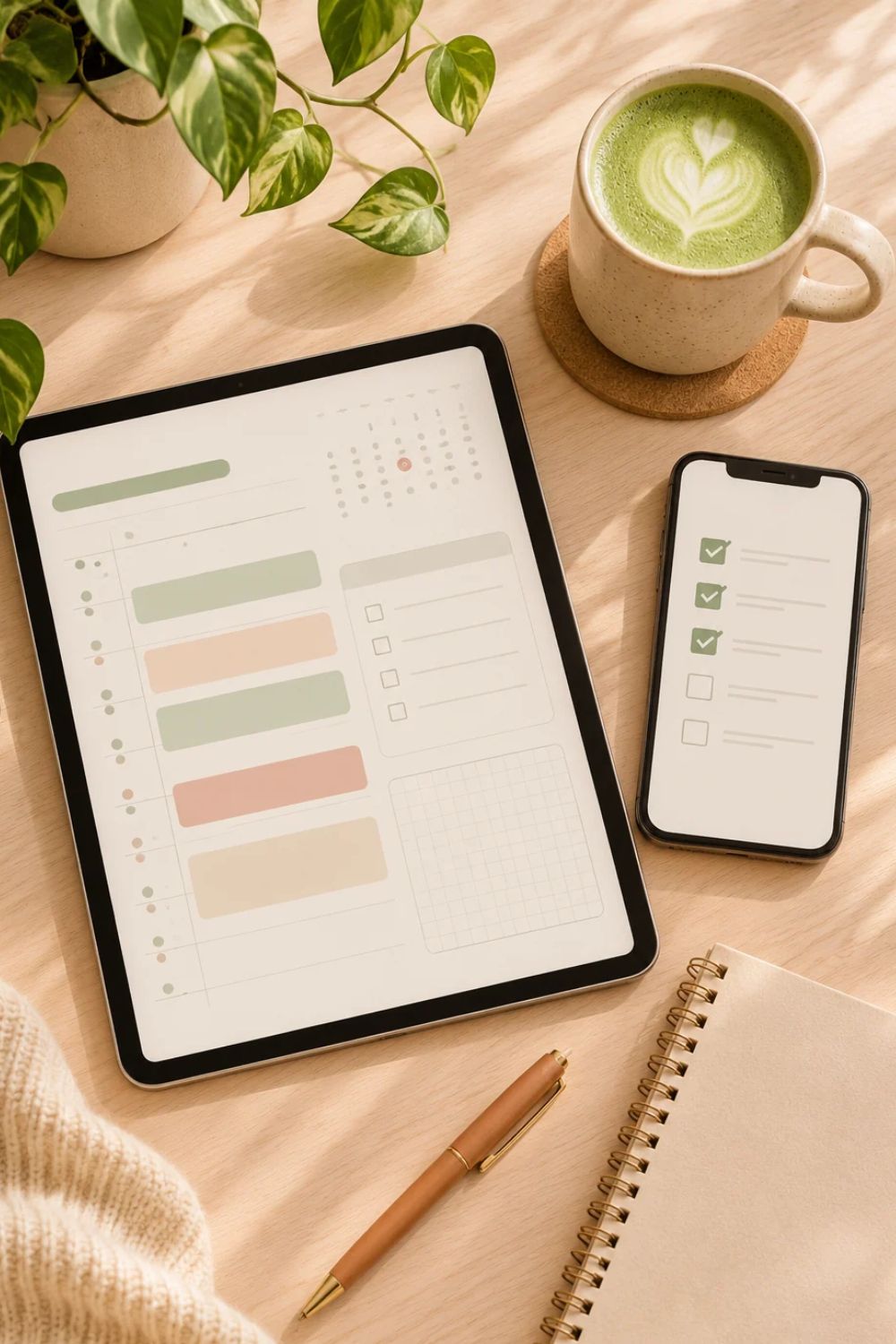
Try keeping a short daily list of three priorities somewhere you naturally look.
That might be:
- A notebook beside your computer.
- A small whiteboard.
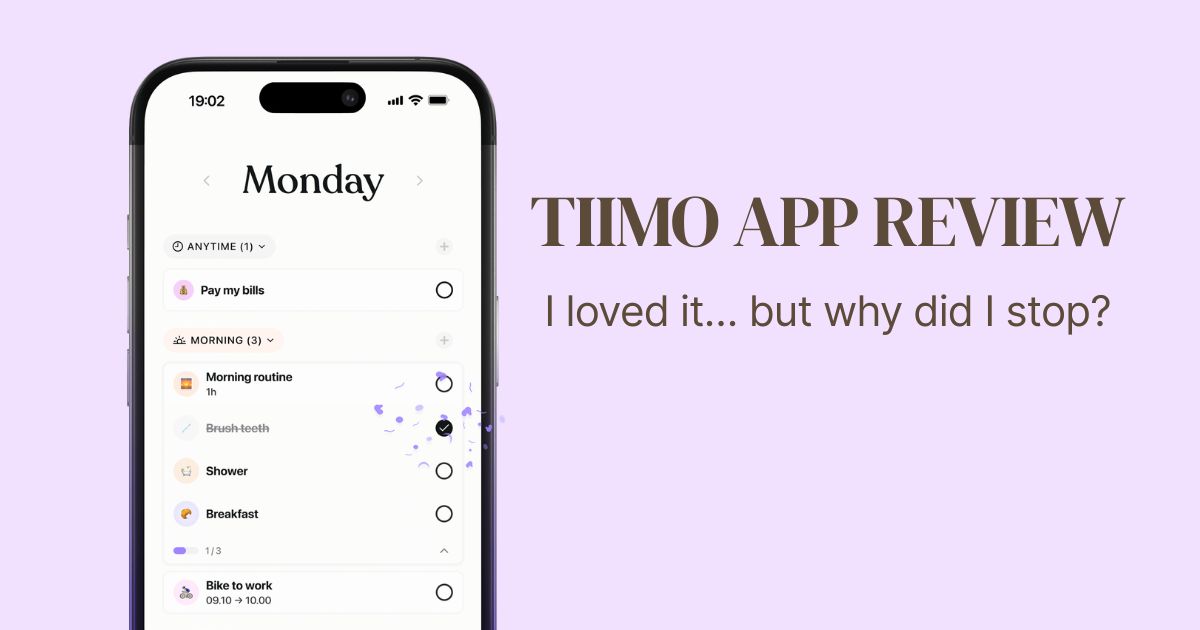
- A phone widget.
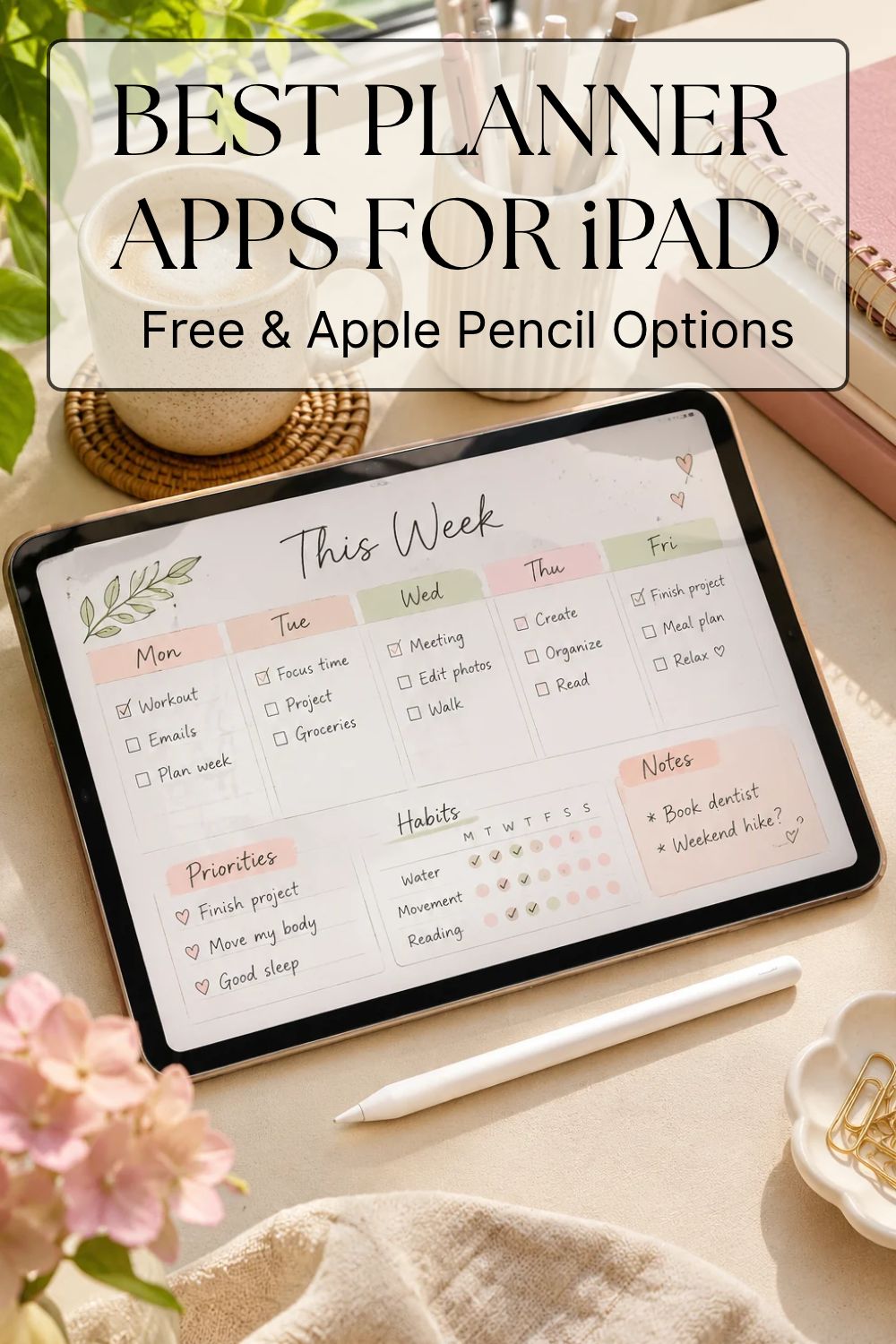
- A digital planner.
The goal is not to remember everything.
It’s to create an external reminder that doesn’t demand constant mental effort.
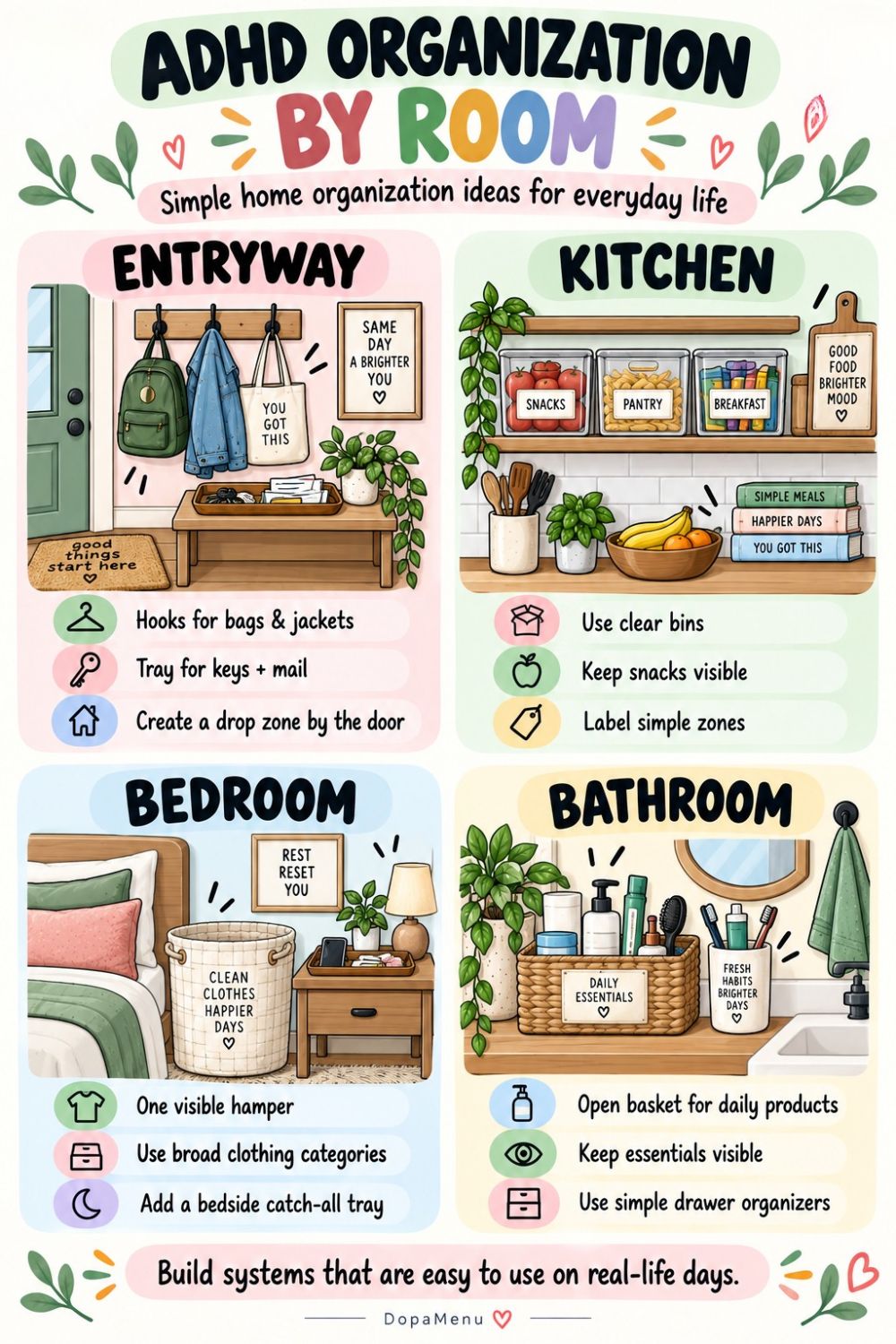
For more ideas, see my 15 ADHD organization tips for adults.
Strategy 3: Use Flexible Routines Instead of Perfect Schedules
I love the idea of planning.
What I don’t love is when a beautifully planned day becomes useless because one thing takes longer than expected.
That’s why I prefer flexible daily structures.
Rather than expecting the same productivity level every day, consider creating three versions of your routine:
Green day: You have enough energy for your normal responsibilities and optional activities.
Yellow day: You focus on essentials and reduce unnecessary decisions.
Red day: You prioritize basic needs and genuinely necessary commitments.
You can explore this approach in my ADHD daily routine for adults.
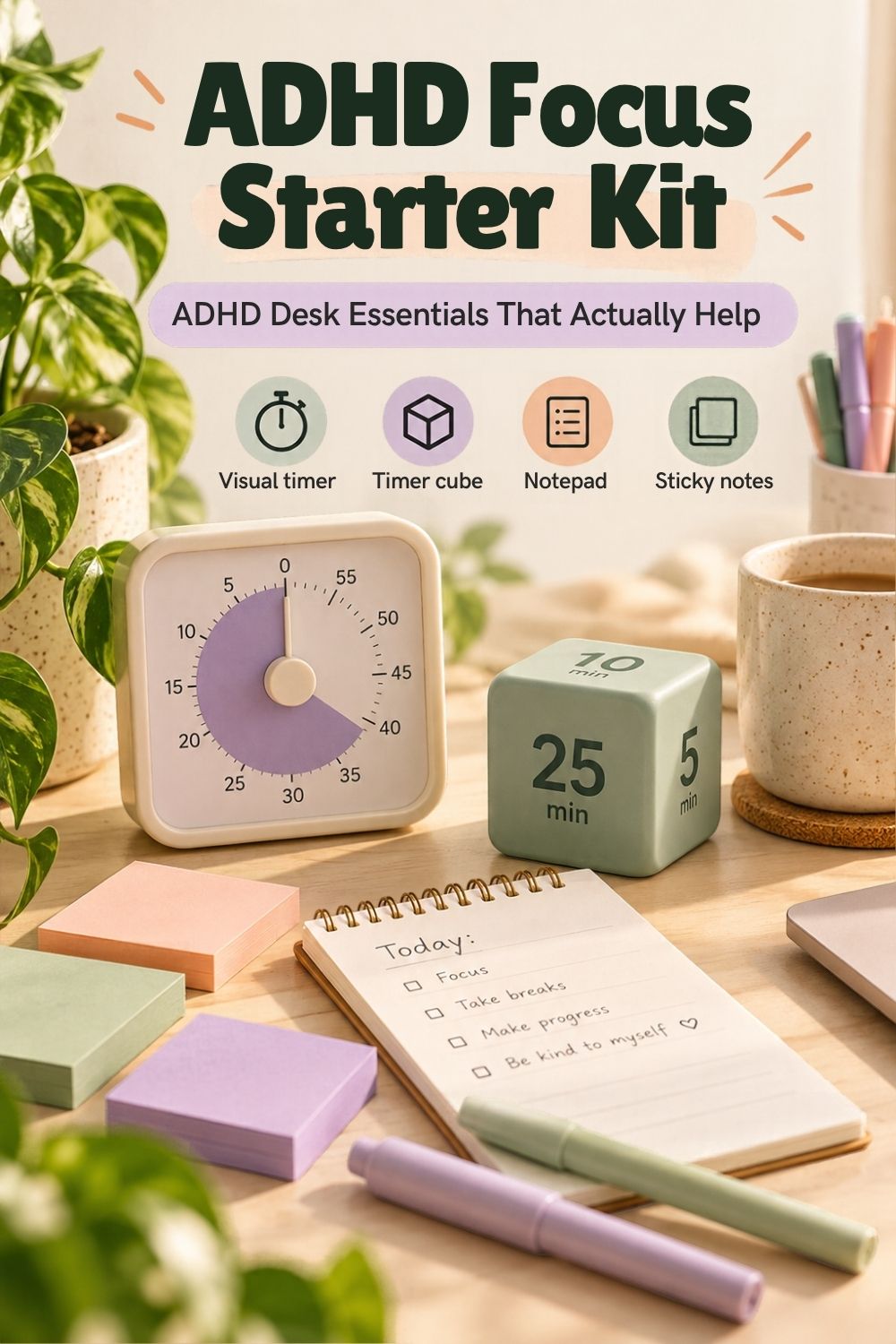
Strategy 4: Use External Timers for Time Management
If you frequently underestimate how long tasks take, external reminders may help.
Try:
- A countdown timer.
- Calendar notifications.
- A visual timer.
- A reminder before you need to switch tasks.
- Tracking how long recurring tasks actually take.
Something I’ve personally found useful is measuring working time to understand how much effort goes into a project.
It’s not about monitoring every minute.
It’s about having realistic information instead of relying entirely on memory.
Strategy 5: Make Boring Tasks More Engaging
Some activities are difficult not because they’re complicated, but because they provide very little interest or stimulation.
Instead of forcing yourself through everything in complete silence, experiment with adding something enjoyable.
For example:
- Listening to a podcast while cleaning.
- Playing music while organizing.
- Working alongside another person.
- Using a colorful timer.
- Changing your environment.
I call these little additions “sides” in my dopamine menu.
You can browse 75+ dopamine menu examples for more inspiration.
Strategy 6: Create a Low-Energy Backup Plan
Not every day is a high-energy day.
Sometimes you’re tired, overstimulated, stressed, or simply struggling to get started.
Having a backup plan can reduce the number of decisions you need to make.
For example:
- Keep a few easy meals available.
- Have one simple cleaning routine.
- Prepare tomorrow’s essentials in advance.
- Keep a short list of calming activities.
- Choose a smaller version of your most important task.
My low-dopamine evening routine is built around this idea.
Strategy 7: Choose Tools That Solve Real Problems
ADHD-friendly tools can be helpful.
But buying another planner doesn’t automatically make organizing easier.
Before choosing an app, notebook, or gadget, ask:
What specific problem am I trying to solve?
| If you struggle with… | Consider trying… |
|---|---|
| Forgetting appointments | Calendar reminders |
| Losing track of time | Visual timer |
| Feeling overwhelmed by tasks | Short daily priority list |
| Forgetting everyday objects | Dedicated drop zones |
| Starting boring tasks | Body doubling or a short timed session |
| Maintaining routines | Visual checklists or routine anchors |
If you want to explore physical tools, I’ve collected practical options in my ADHD products on Amazon guide.
And if you prefer planning on paper, see my comparison of ADHD planners for adults.
You don’t need to purchase anything to begin experimenting with these strategies.
4. Free ADHD Help for Adults: Where to Look
If professional support is expensive or difficult to access, free educational resources can be an important starting point.
They won’t replace personalized medical care, but they can help you understand ADHD and identify your next steps.
Free ADHD Information and Resources
National Institute of Mental Health (NIMH)
Website: https://www.nimh.nih.gov
A reliable starting point for research-based information about ADHD symptoms, assessment, and treatment.
Centers for Disease Control and Prevention (CDC)
Website: https://www.cdc.gov/adhd/
Offers ADHD education and links to resources for adults.
CHADD
Website: https://chadd.org
Provides educational material, information about adult ADHD, and access to community and support resources, especially in the United States.
NHS
Website: https://www.nhs.uk/conditions/adhd-adults/
Helpful for understanding ADHD and the UK healthcare pathway.
ADDA (Attention Deficit Disorder Association)
Website: https://add.org
Focuses on adult ADHD and offers education and community support. Some resources are free, while certain groups, events, or services may require payment.
Free ADHD Support Groups and Online Communities
You may also find support through:
- Local nonprofit organizations.
- Peer-led ADHD support groups.
- Community mental health services.
- ADHD-focused online forums.
- Free educational webinars.
- ADHD-related discussion communities on Reddit.
Online communities can help you feel connected and discover practical ideas.
However, personal anecdotes aren’t always reliable medical information.
Use credible clinical resources when checking claims about diagnosis, treatment, supplements, or medication.
5. How to Find ADHD Help Near You
Searching for “ADHD help for adults near me” usually means you’re ready for more personalized support.
Start by checking which healthcare professionals and organizations provide adult ADHD services in your country.
Depending on your healthcare system, your first contact might be a primary care physician, psychiatrist, qualified psychologist, or specialist ADHD clinic.
Before booking, ask:
- Do you assess or treat ADHD in adults?
- What qualifications does the clinician have?
- Is a referral required?
- What will the assessment include?
- How much will it cost?
- What happens after a diagnosis?
- Do you offer follow-up care?
- Can you provide online appointments?
If you’re seeking medication, confirm that the service includes access to an appropriately qualified prescriber and any necessary follow-up monitoring.
ADHD Help for Adults in the UK
In the UK, a GP can help you understand the local referral process.
The NHS provides information about adult ADHD assessments, treatment, and available support.
Some services may have substantial waiting times, and access differs between areas and UK nations.
For current options, see the official NHS ADHD information page.
ADHD Help for Adults in the US
In the United States, you might begin with your primary care provider, health insurance directory, or a specialist mental health service.
CHADD also offers a local chapter and support group directory.
If you don’t have insurance, explore community health centers, nonprofit services, and sliding-scale mental health providers in your area.
Availability and costs vary, so confirm the details directly.
6. Can You Get ADHD Help Online?
Yes. Online ADHD support may include:
- Telehealth assessments where legally and clinically appropriate.
- Online therapy.
- Virtual coaching.
- Peer support groups.
- Educational courses.
- Digital planning and organization tools.
Online services can be particularly useful when local specialists are unavailable or travel creates an additional barrier.
However, not every online ADHD assessment or coaching service is equivalent.
Before paying, check the provider’s qualifications, the clinical process, privacy practices, and whether they can provide ongoing care.
An online screening quiz should never be presented as a definitive diagnosis.
7. How to Calm Down When ADHD Feels Overwhelming
Sometimes the immediate problem isn’t organization or productivity.
It’s feeling overstimulated, frustrated, restless, or mentally exhausted.
If that happens, focus on reducing demands before trying to solve everything.
You could experiment with:
- Moving to a quieter environment.
- Reducing unnecessary notifications or background noise.
- Taking a short movement break.
- Drinking water or having a snack if you’ve missed a meal.
- Writing down the thoughts competing for your attention.
- Choosing one manageable next step.
- Asking someone you trust for support.
Different strategies work for different people.
If emotional distress is intense, persistent, or affecting your safety, seek professional help rather than relying only on self-help techniques.
For days when you need stimulation or comfort but can’t decide what would help, try my free dopamine menu template.
8. ADHD Help for Adult Women
ADHD doesn’t look identical in everyone, and some women describe recognizing their symptoms only in adulthood.
Difficulties may have been overlooked, attributed to anxiety or stress, or compensated for through elaborate organization systems.
For some adults, recognizing these patterns later in life can lead to a new understanding of past experiences.
Hormonal changes may also affect ADHD symptoms for some people, although individual experiences and the research evidence vary.
The important point is that you don’t need to match a stereotypical image of ADHD to ask for an assessment.
If you’re struggling with everyday functioning, a qualified clinician can help explore possible explanations and appropriate support.
9. ADHD Help for Adults With Anxiety, Autism, or Other Conditions
ADHD can coexist with other conditions, including anxiety disorders, depression, sleep problems, and autism.
This can complicate both diagnosis and day-to-day management.
For example, difficulty starting a task might involve ADHD-related executive dysfunction, anxiety about the result, exhaustion, or several contributing factors.
A strategy that helps one difficulty may not address all of them.
That’s why a comprehensive assessment and individualized treatment plan are valuable.
If you’re exploring ADHD alongside autism, look for clinicians familiar with both conditions rather than assuming every difficulty has the same cause.
10. A Simple 7-Day ADHD Self-Help Starter Plan
If you’ve reached this point and feel overwhelmed by the options, don’t try everything.
Here’s a realistic one-week experiment.
| Day | One small action |
|---|---|
| Day 1 | Write down your three biggest everyday difficulties |
| Day 2 | Choose one external reminder |
| Day 3 | Break one avoided task into three tiny steps |
| Day 4 | Try a five-minute timed work session |
| Day 5 | Create one morning or evening routine anchor |
| Day 6 | Explore one credible ADHD resource or support community |
| Day 7 | Reflect on what helped and identify your next step |
This plan is not a clinical intervention or ADHD treatment program.
It’s simply a way to experiment with practical supports without introducing ten different systems at once.
And if you want to explore the DopaMenu approach, start by creating a small personal list of activities that offer comfort, stimulation, movement, or connection.
You can use the free printable dopamine menu template to make one.
Frequently Asked Questions About ADHD Help for Adults
What is the best help for adults with ADHD?
There isn’t one best solution for everyone. Evidence-based ADHD treatment can include medication and psychological interventions, while practical strategies, accommodations, and peer support may address specific everyday challenges.
Can adults get free ADHD help?
Yes. Free educational resources, some peer support groups, and publicly funded services may be available. Clinical assessment and treatment costs depend on your location and healthcare coverage.
How can I manage ADHD without medication?
Strategies such as ADHD-focused CBT, environmental changes, external reminders, and structured skills training may help. If medication has been recommended, discuss alternatives or concerns with your clinician rather than changing treatment independently.
Can ADHD be treated naturally?
Healthy routines, sleep, exercise, and stress management may support wellbeing, but they are not proven cures for ADHD. Be cautious about products or supplements advertised as natural ADHD treatments without strong clinical evidence.
What if I can’t afford ADHD treatment?
Explore public healthcare pathways, community health centers, nonprofit organizations, university training clinics, and providers offering sliding-scale fees. Free educational and peer support resources may also help while you investigate clinical options.
Are ADHD support groups useful for adults?
They can provide connection, encouragement, and shared practical experiences. However, peer support doesn’t replace professional assessment or treatment when these are needed.
Can I get ADHD help if I’m not officially diagnosed?
Yes. You can begin learning about ADHD, using low-risk organizational strategies, and discussing your difficulties with a healthcare professional before receiving a diagnosis.
Are online ADHD tests reliable?
Some validated screening tools can indicate whether further assessment may be appropriate. They cannot diagnose ADHD independently, and the quality of online quizzes varies considerably.
What are the best books for adults with ADHD?
Books written by qualified clinicians or researchers can be useful for understanding ADHD and learning practical coping strategies. Look for current editions, credible authors, and approaches consistent with established clinical guidance.
Does ADHD help for adults work differently if you also have autism?
Support may need to address both conditions, particularly if sensory needs, routines, attention regulation, or transitions create competing demands. Individualized assessment is preferable to assuming one approach will work for everyone.
Final Thoughts: ADHD Support Should Make Life Easier, Not More Complicated
One of the biggest things I’ve learned while exploring ADHD-friendly productivity is that more structure doesn’t automatically mean more support.
Sometimes a new planning system is useful.
Other times, it becomes another thing to maintain.
The most valuable changes are often smaller and more personal.
A reminder that actually works.
A routine flexible enough to survive a difficult day.
A better understanding of why a task feels hard.
A professional who listens carefully.
Or simply discovering that there are different ways to approach a problem you’ve struggled with for years.
You don’t have to solve every ADHD-related difficulty at once.
Start by identifying what’s affecting your life most, explore the support that’s available to you, and choose one realistic next step.
Continue Exploring ADHD-Friendly Living
If you’re looking for practical strategies to complement professional support, these DopaMenu guides may help:
- Living With ADHD as an Adult — Understanding everyday ADHD experiences.
- ADHD Daily Routine for Adults — Creating a flexible daily structure.
- ADHD Organization Tips — Making everyday organization more manageable.
- Executive Dysfunction vs. Laziness — Understanding why starting tasks can be difficult.
- Free Dopamine Menu Template — Building a personal list of enjoyable and supportive activities.
Medical disclaimer: This article is for general educational purposes and includes personal experiences. It does not provide medical advice, a diagnosis, or an individualized treatment plan. Consult an appropriately qualified healthcare professional for assessment and treatment decisions.